
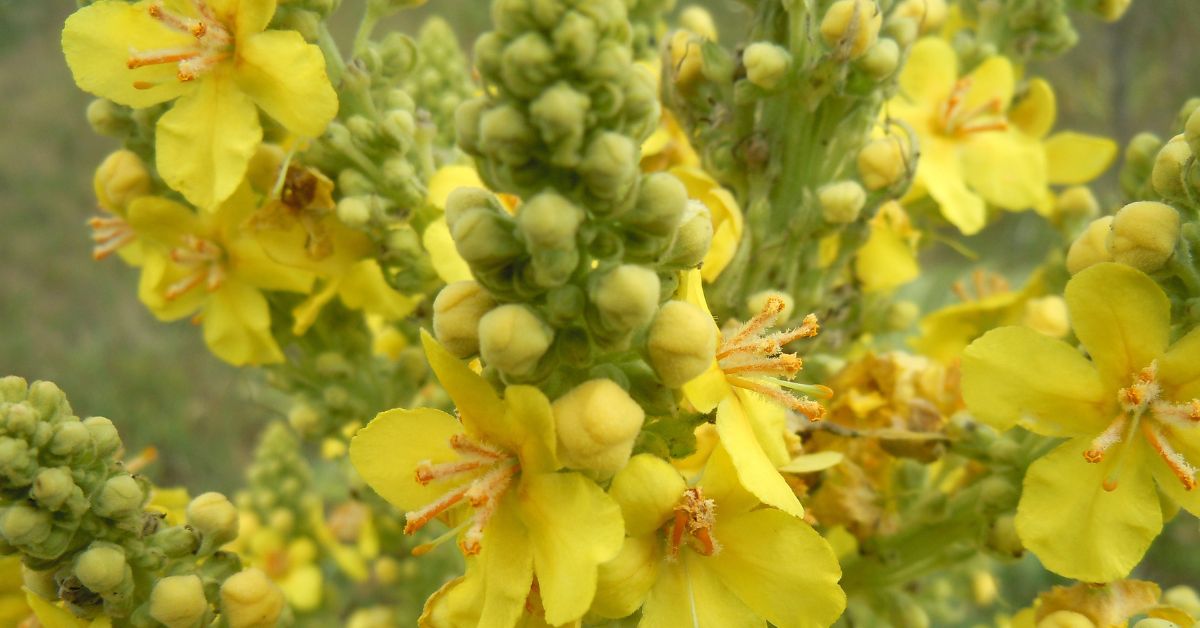
Woolly mullein (Verbascum phlomoides) is among the best-known medicinal herbs for respiratory health, although today it is often overshadowed by herbs such as thyme, ribwort plantain, and linden flower. Nevertheless, it has been used in traditional herbal medicine for centuries to support various respiratory conditions associated with coughs and catarrhal symptoms. Its popularity is largely due to its unique combination of mucilage and saponins, which may help protect mucous membranes while also supporting mucus clearance.
In phytotherapy, woolly mullein is primarily used for respiratory catarrh, coughs, and irritated airways, although traditional herbal practice has also associated it with digestive and urinary tract complaints.
What is woolly mullein?
Woolly mullein (Verbascum phlomoides) is a tall medicinal plant with striking yellow flowers. In herbal medicine, the flowers are primarily used.
Its most important active compounds include:
- Mucilage
- Saponins
- Flavonoids
Together, these compounds contribute to the plant’s:
- Expectorant
- Demulcent (mucous membrane-coating)
- Anti-inflammatory
- Mildly antibacterial
properties.
Coughs and respiratory catarrh
The best-known application of woolly mullein is respiratory support.
Traditionally, it has been used for:
- Productive coughs
- Tracheitis
- Bronchitis
- Upper respiratory irritation
What makes the plant particularly interesting is that it may support respiratory health in two different ways.
The mucilage may:
- Coat irritated mucous membranes
- Reduce throat irritation
- Help calm the urge to cough
Meanwhile, the saponins may:
- Help loosen stubborn mucus
- Support mucus elimination
- Promote airway clearance
Demulcent and mucous membrane-protective effects
One of woolly mullein’s most valuable properties is its ability to help protect mucous membranes.
In irritated tissues, the mucilage may:
- Form a protective layer
- Reduce discomfort
- Support regeneration
This may be especially beneficial in cases of:
- Scratchy throat
- Hoarseness
- Dry cough
Anti-inflammatory properties
The flavonoids found in woolly mullein may:
- Help reduce inflammatory processes
- Support the regeneration of irritated mucous membranes
These effects may be relevant not only for the respiratory tract but also for other mucosal tissues.
Mild antibacterial effects
Certain active compounds in woolly mullein possess mild antibacterial properties.
Although it does not replace medical treatment, it may contribute to supporting the body’s natural defense mechanisms.
Intestinal inflammation and digestive complaints
In traditional herbal medicine, woolly mullein has also been used for:
- Intestinal inflammation
- Mild digestive irritation
Its mucilage content may:
- Support irritated intestinal mucosa
- Promote regeneration
Support during bladder inflammation
Traditional herbal sources also mention woolly mullein in cases of:
- Bladder inflammation (cystitis)
In these situations, its:
- Anti-inflammatory
- Mucous membrane-protective
properties were considered beneficial.
Liver and gallbladder support
Traditional applications have also included support for:
- Liver function
- Gallbladder function
However, these uses are much less well known than its respiratory applications.
How is woolly mullein used?
Woolly mullein is most commonly consumed as:
Herbal tea
General preparation:
- Pour boiling water over 1–2 teaspoons of dried flowers
- Allow to steep for 10–15 minutes
- Strain carefully before use
Careful straining is particularly important because the tiny hairs on the flowers may irritate the throat if they remain in the tea.
Precautions
Although woolly mullein is generally well tolerated, it may not be suitable in certain situations.
It is not recommended:
- During acute respiratory catarrhal conditions
- In cases of excessive congestion of the mucous membranes
As with any medicinal herb, persistent or severe symptoms should be evaluated by a healthcare professional.
Woolly mullein is a traditional medicinal herb primarily used for coughs, bronchitis, tracheitis, and irritated mucous membranes. Its mucilage may help protect irritated tissues, its saponins may support mucus expectoration, and its flavonoids may contribute to reducing inflammatory processes.
Although it is less widely known today than some other respiratory herbs, woolly mullein continues to hold an important place in phytotherapy, particularly for the natural support of respiratory health.