Most people know the oak tree for its strength and longevity, but in herbal medicine it is not the wood that is valued—it is the bark. Oak bark is one of the richest natural sources of tannins and is primarily used to support acute diarrhea as well as various inflammatory conditions affecting the skin and mucous membranes.
Thanks to its high tannin content, oak bark possesses strong astringent, anti-inflammatory, antimicrobial, and hemostatic properties. For this reason, it is used both internally and externally for conditions ranging from acute diarrhea and sore throat to hemorrhoidal discomfort and irritated skin.
What is oak bark?
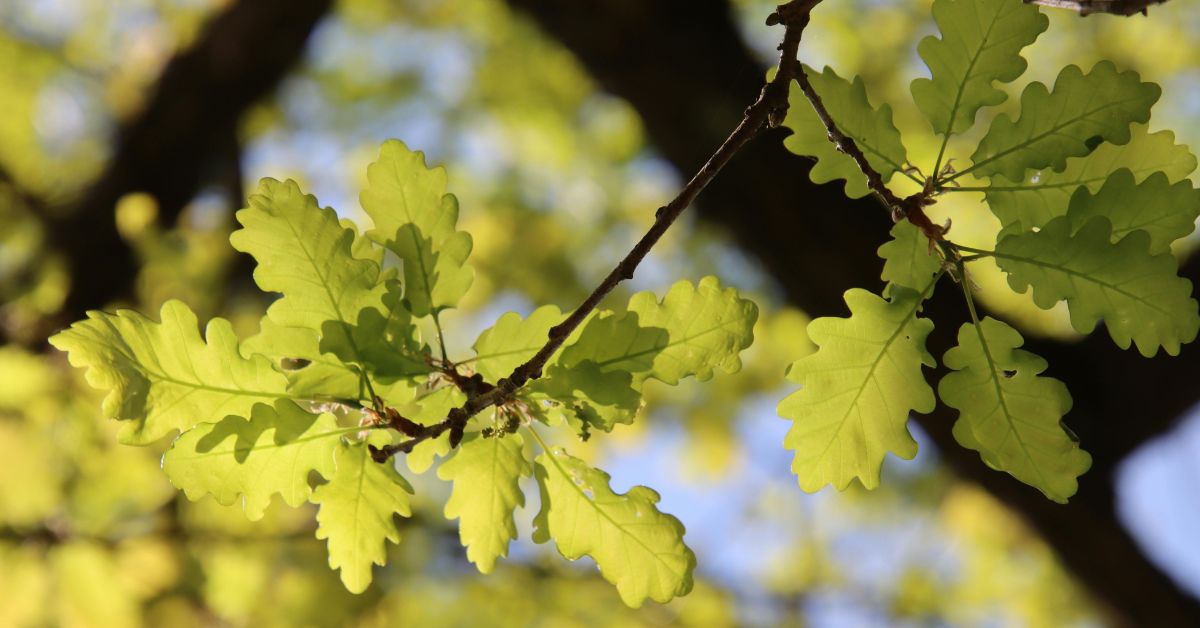
Oak bark is obtained from several oak species (Quercus spp.), one of Europe’s most well-known tree genera. For medicinal purposes, the bark of young branches and trunks is used.
Its main active compounds include:
- tannins
- polyphenolic compounds
- smaller amounts of flavonoids
Most of oak bark’s therapeutic effects are attributed to its exceptionally high tannin content.
Why are tannins important?
Tannins have powerful astringent properties.
This means they may:
- reduce excessive secretions from mucous membranes
- form a protective layer over irritated tissues
- support tissue regeneration
- help reduce inflammatory processes
These properties make oak bark a remarkably versatile medicinal herb.
Acute non-specific diarrhea
One of the best-known uses of oak bark is the support of acute, non-specific diarrhea.
Its astringent properties may:
- help reduce excessive fluid loss
- support the regeneration of the intestinal mucosa
- contribute to the normalization of bowel movements
However, diarrhea accompanied by blood, high fever, or persistent symptoms always requires medical evaluation.
Inflammation of the mouth and throat
Oak bark decoctions are commonly used for:
- sore throat
- inflammation of the oral mucosa
- gingivitis
- canker sores
Due to its antimicrobial and anti-inflammatory properties, oak bark may:
- help reduce discomfort
- support mucosal healing
- soothe irritation
In these cases, it is typically used as a gargle or mouth rinse.
Inflammatory skin conditions
Oak bark is also highly valued for external use.
It may be applied to:
- inflamed skin
- weeping skin conditions
- irritated skin
- itchy areas
Its astringent action may:
- reduce excessive moisture and secretions
- help calm inflammation
- support skin regeneration
Hemorrhoids and anal irritation
One of the classic applications of oak bark is the support of hemorrhoidal complaints.
It is commonly used in the form of:
- sitz baths
- compresses
Its astringent properties may:
- reduce discomfort
- support the healing of inflamed tissues
- relieve irritation
Irritation of the external genital area
In herbal medicine, oak bark decoctions are also used for:
- external genital irritation
- mild inflammation of the mucous membranes
In these situations, it is most commonly applied as:
- a wash
- a sitz bath
Hemostatic properties
Oak bark has traditionally been used for:
- minor bleeding
- irritated mucous membranes
Its astringent effect may:
- help reduce minor bleeding
- support tissue regeneration
How is oak bark used?
Tea and decoction
For oak bark, preparing a decoction is generally preferred over a simple infusion.
Typical preparation:
- Place the bark in cold water.
- Bring it to a boil.
- Simmer for 10–15 minutes.
- Strain before use.
The resulting decoction may be used:
- internally
- as a gargle
- as a compress
- in sitz baths
Precautions
Due to its high tannin content, oak bark should be used thoughtfully.
Excessive use
Large amounts or prolonged use may:
- cause constipation
- irritate the digestive tract
Contraindications for external use
Baths and washes prepared from oak bark are not recommended for:
- extensive skin injuries
- feverish conditions
- infectious diseases
- heart failure
- high blood pressure
In these situations, professional medical advice should be sought before use.
Oak bark is one of the most important tannin-rich medicinal herbs. It is widely used to support acute diarrhea, inflammatory conditions of the mouth and throat, and various skin and mucosal complaints. Its astringent, anti-inflammatory, antimicrobial, and hemostatic properties make it an exceptionally versatile herbal remedy.
Oak bark can be a valuable addition to a home herbal toolkit when used appropriately—especially when the goal is to support irritated skin or inflamed mucous membranes naturally.