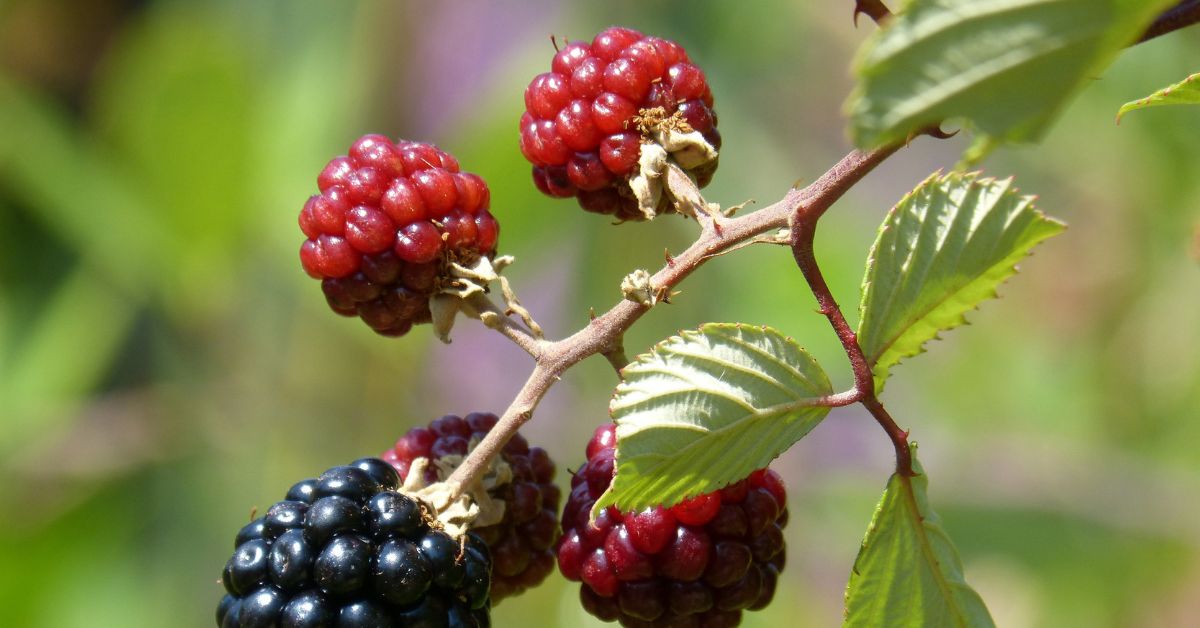
While blackberries are enjoyed by many as a delicious fruit, far fewer people realize that the leaves of the plant are also considered a valuable medicinal herb. Blackberry leaf has been used for centuries to support various digestive and mucosal complaints, primarily due to its high tannin content. In phytotherapy, it is particularly well known for supporting the management of diarrhea, sore throat, and inflammatory conditions of the mouth.
One of the most important properties of blackberry leaf is its astringent effect, which may help soothe inflamed or irritated mucous membranes. In addition, it possesses antibacterial and anti-inflammatory properties, making it a versatile herb for the natural home medicine cabinet.
What is blackberry leaf?
Blackberry leaf is obtained from the common blackberry (Rubus fruticosus) and is used either on its own or as part of herbal tea blends.
Its most important active compounds include:
- Tannins
- Flavonoids
- Organic acids
Together, these compounds contribute to the plant’s:
- Astringent
- Anti-inflammatory
- Antibacterial
properties.
Why are tannins so important?
The most significant active compounds in blackberry leaf are tannins.
Tannins:
- Have an astringent effect
- May help reduce irritation of mucous membranes
- May support the regeneration of inflamed tissues
These properties make blackberry leaf particularly valuable for:
- Diarrhea
- Sore throat
- Oral inflammatory conditions
Support for diarrhea
One of the best-known uses of blackberry leaf is the support of mild, non-infectious diarrhea.
Its tannins may:
- Reduce irritation of the intestinal lining
- Decrease excessive secretion
- Help normalize bowel movements
For this reason, blackberry leaf has traditionally been classified among herbs used to help manage diarrhea.
However, it is important to note that persistent or severe diarrhea always requires medical evaluation.
Oral inflammatory conditions
Blackberry leaf has long been used for:
- Gingivitis
- Mouth ulcers (aphthae)
- Mild inflammation of the oral mucosa
Its astringent and antibacterial properties may:
- Help reduce discomfort
- Support mucosal regeneration
In these cases, it can be used not only as a tea but also as a mouth rinse.
Sore throat and throat inflammation
Blackberry leaf may also play a role in the natural support of throat complaints.
It may be particularly useful for:
- Scratchy throat
- Mild throat inflammation
- Irritated mucous membranes
The tannins may form a protective layer on the mucosal surface, while their anti-inflammatory properties may contribute to healing and recovery.
Antibacterial and anti-inflammatory effects
The flavonoids and other plant compounds found in blackberry leaf may:
- Support the body’s natural defense mechanisms
- Help reduce inflammatory processes
As a result, the herb is traditionally used for both:
- Digestive complaints
- Mucosal irritations
Blood pressure-lowering properties
Fewer people are aware that blackberry leaf has also been traditionally associated with a mild blood pressure-lowering effect.
This effect is generally not strong enough to be considered a treatment on its own, but it contributes to the herb’s traditional range of applications.
How is blackberry leaf used?
As a tea
The most common method of use is herbal tea.
General preparation:
- Pour boiling water over 1–2 teaspoons of dried leaves
- Allow to steep for 10–15 minutes
- Strain before use
The tea may be used:
- Internally as a beverage
- For gargling
- As a mouth rinse
Precautions
Although blackberry leaf is generally well tolerated, caution is advised in certain situations.
It is not recommended for:
- Young children
- Pregnant women
Excessive consumption
In larger amounts, blackberry leaf may cause:
- Stomach irritation
- Constipation
This is primarily due to its high tannin content.
When can blackberry leaf be useful?
Blackberry leaf may be particularly beneficial when:
- Mild diarrhea occurs
- A sore throat develops
- The oral mucosa becomes irritated
- Natural anti-inflammatory support is desired
- You are looking for a herb that supports both digestive health and mucosal wellbeing
Blackberry leaf is a versatile yet often overlooked medicinal herb. Thanks to its high tannin content, it is primarily used for diarrhea, sore throat, gingivitis, and other mucosal complaints. It also possesses antibacterial, anti-inflammatory, and mild blood pressure-lowering properties.
While most people are familiar with the blackberry fruit, the leaves of the plant also deserve a valuable place in the herbal home medicine cabinet.