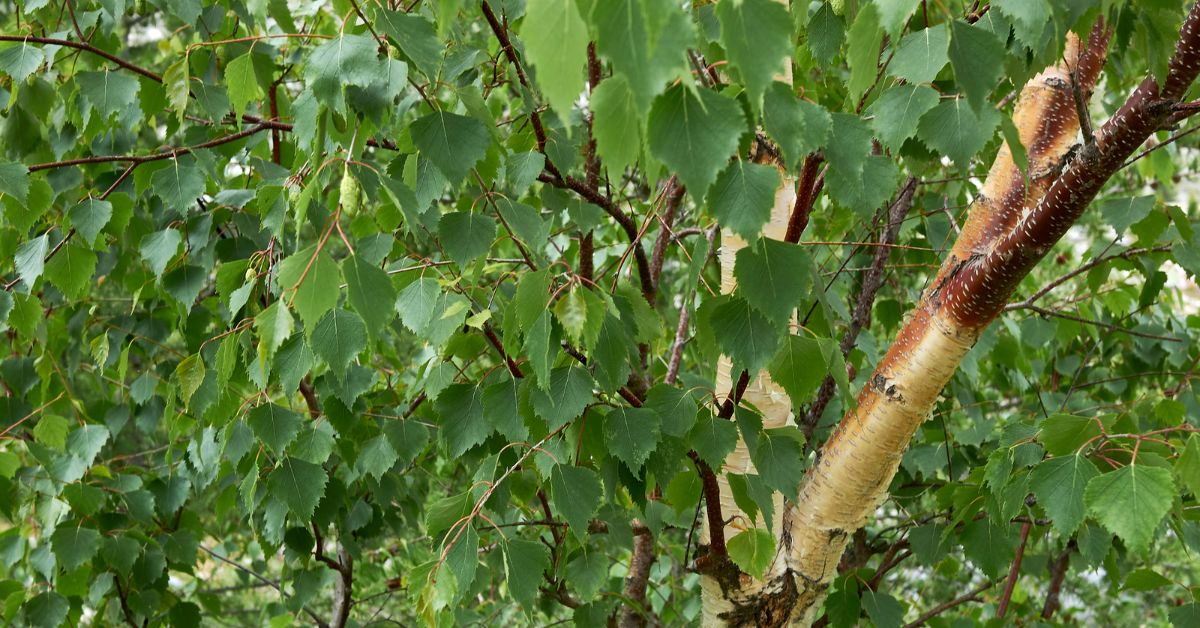
For many people, the birch tree is simply a symbol of spring and forests, but in phytotherapy it represents far more than just an ornamental tree. Common birch leaves have long been used to support urinary tract complaints, kidney gravel, and various elimination-related issues. The plant is especially known for its mild diuretic effect, but its anti-inflammatory properties also make it an important medicinal herb.
Birch leaves are particularly interesting because they may:
- increase urine production
- support flushing of the urinary tract
- while being considered a gentler diuretic than some other herbs due to their mineral content.
What is common birch?
Common birch (Betula pendula) is a tree species widely distributed throughout Europe. In phytotherapy, primarily:
- the leaves
are used.
Its main active compounds include:
- flavonoid glycosides
- saponins
- potassium
Together, these compounds contribute to the plant’s:
- diuretic
- anti-inflammatory
- urinary-supporting
effects.
How does it work?
The best-known property of birch leaves is their mild diuretic action.
They may help:
- increase urine output
- support flushing of the urinary tract
- reduce stagnation within the urinary system.
Increased urination may:
- help eliminate certain bacteria
- support the natural cleansing of the urinary tract.
The flavonoids also possess:
- antioxidant
- anti-inflammatory
properties, which may further strengthen the herb’s supportive role.
Support for urinary tract infections
Traditionally, common birch has been used as supportive therapy for bacterial urinary tract infections.
In milder cases, it may:
- support flushing of the urinary tract
- help eliminate bacteria.
However, it is important to note that:
- it does not replace medical treatment in more serious infections.
Kidney gravel and kidney stones
Birch leaves are also frequently used in cases of:
- susceptibility to kidney gravel
- minor urinary deposits.
Increased fluid elimination may:
- support cleansing of the urinary tract
- help reduce stagnant substances.
However, larger kidney stones always require medical supervision.
Mild anti-inflammatory properties
Birch leaves are interesting not only for their diuretic effects.
Their flavonoids and other active compounds may:
- contribute to reducing inflammatory processes
- support soothing irritated mucous membranes.
Because of this, birch is known not only for urinary tract support, but also for broader elimination-system support.
Why is it popular in cleansing regimens?
Birch leaves are commonly found in:
- spring “cleansing” tea blends
- diuretic formulas
- urinary tract herbal preparations.
This is because they may:
- promote fluid elimination
- while remaining relatively gentle compared to stronger diuretic herbs.
How is it used?
As a tea
Birch leaves are most commonly consumed as herbal tea.
General preparation:
- pour hot water over 1–2 teaspoons of dried leaves
- let steep for about 10 minutes.
Adequate fluid intake is especially important while using birch tea.
In herbal blends
Birch is often combined with:
- nettle
- field horsetail
- goldenrod
in urinary tract and diuretic herbal teas.
What should you pay attention to?
Although birch leaves are generally well tolerated, they are not recommended in certain cases.
Not recommended during:
- pregnancy
- chronic kidney failure
- edema related to heart problems.
Drug interactions
Caution is advised when taking:
- heart medications.
Salicylate sensitivity
Birch may cause problems in individuals with salicylate hypersensitivity, therefore it is not recommended in such cases.
When can common birch be useful?
Common birch may be especially beneficial if:
- urinary tract complaints occur
- mild diuretic support is needed
- there is a tendency toward kidney gravel
- natural urinary tract support is desired.
Common birch is one of the best-known natural diuretic herbs, primarily used for urinary tract problems, kidney gravel, and mild elimination-system complaints. Thanks to its flavonoids and potassium content, it supports both urinary tract function and fluid elimination.
When used properly, it can be a valuable part of a natural home herbal toolkit — though mindful and cautious use is especially important in individuals with existing heart or kidney conditions.