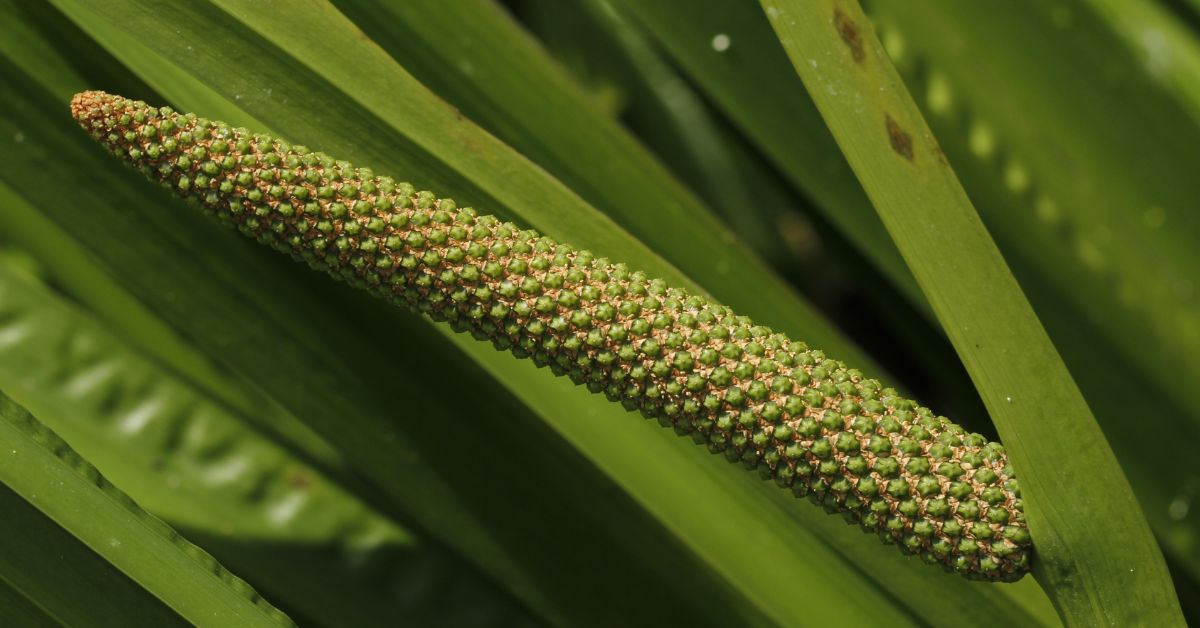
Sweet flag is not among the best-known medicinal herbs, yet it has played an important role in phytotherapy for centuries. Its distinctive aromatic rhizome has long been used for digestive complaints, loss of appetite, and various gastrointestinal problems. Due to its high bitter compound content, it is primarily associated with supporting digestion, although in traditional folk medicine it was also used for respiratory complaints.
What makes sweet flag particularly interesting is that it combines:
- appetite-stimulating
- digestion-supporting
- antispasmodic
- and carminative (gas-relieving) effects.
What is sweet flag?
Sweet flag (Acorus calamus) is a marshland plant whose:
- root
- and essential oil
are mainly used in phytotherapy.
Its most important active compounds include:
- essential oils
- bitter substances
- tannins
Together, these compounds are responsible for the plant’s:
- digestive-supporting
- appetite-enhancing
- antispasmodic
- and mild antiseptic properties.
Active compounds of sweet flag
One of sweet flag’s best-known characteristics is its high bitter compound content.
These bitter substances may:
- stimulate the production of digestive juices
- support stomach and bile function
- enhance appetite
For this reason, sweet flag has traditionally been used for:
- loss of appetite
- sluggish digestion
- a feeling of fullness.
Loss of appetite and digestive complaints
Sweet flag is considered particularly useful when:
- appetite is reduced
- digestion feels “slower”
- the stomach feels heavy
The bitter compounds may:
- prepare the digestive system for meals
- support digestive processes
This is why sweet flag is often used before eating.
Dyspeptic complaints
In phytotherapy, sweet flag is also used for dyspeptic complaints, including:
- bloating
- fullness
- stomach pressure
- slow digestion
- excessive intestinal gas formation
Thanks to its antispasmodic and carminative properties, it may help relieve digestive discomfort.
Bile-supporting and carminative effects
Sweet flag may:
- stimulate bile production and bile flow
- support the digestion of fats
Its gas-relieving properties may also:
- reduce bloating
- support the elimination of intestinal gas.
Antispasmodic properties
Sweet flag also has mild antispasmodic effects.
This may be especially helpful in cases of:
- stomach cramps
- digestive tension
- bloating-related discomfort.
Respiratory complaints and cough
Fewer people know that sweet flag has also traditionally been used:
- as a cough suppressant
- and as an expectorant.
Its essential oils may:
- support the cleansing of the airways
- provide mild antiseptic effects.
In folk medicine, it was also used during colds and respiratory infections.
Vasodilating and blood pressure-lowering effects
Traditional herbal medicine suggests that sweet flag may also possess:
- mild vasodilating
- and blood pressure-lowering properties.
Therefore, individuals with low blood pressure should use it with caution.
How is sweet flag used?
As tea
Sweet flag is commonly consumed as a tea.
General preparation:
- the dried root is steeped in hot water
- then left to infuse.
Because of its strong bitter taste, many people combine it with other herbs.
As tincture
Sweet flag is also popular in tincture form, particularly for:
- digestive complaints
- appetite stimulation.
What should you pay attention to?
Sweet flag should be used carefully.
It is not recommended:
- during pregnancy
- while breastfeeding
- for children.
Possible side effects
In larger amounts, sweet flag may:
- irritate the stomach
- increase gastric sensitivity.
Therefore, it should always be used in moderation.
When can sweet flag be useful?
Sweet flag may be especially beneficial if you experience:
- loss of appetite
- bloating and fullness
- sluggish digestion
- digestive cramps
- or if you are looking for natural digestive support.
Sweet flag is a distinctive and fascinating medicinal herb primarily used for digestive complaints, loss of appetite, and bloating. Thanks to its bitter compounds, it supports digestive processes while also offering antispasmodic and carminative effects.
Although it is not among the most widely known medicinal herbs, it has been an important part of phytotherapy for centuries — especially when the digestive system becomes sluggish or needs additional support.