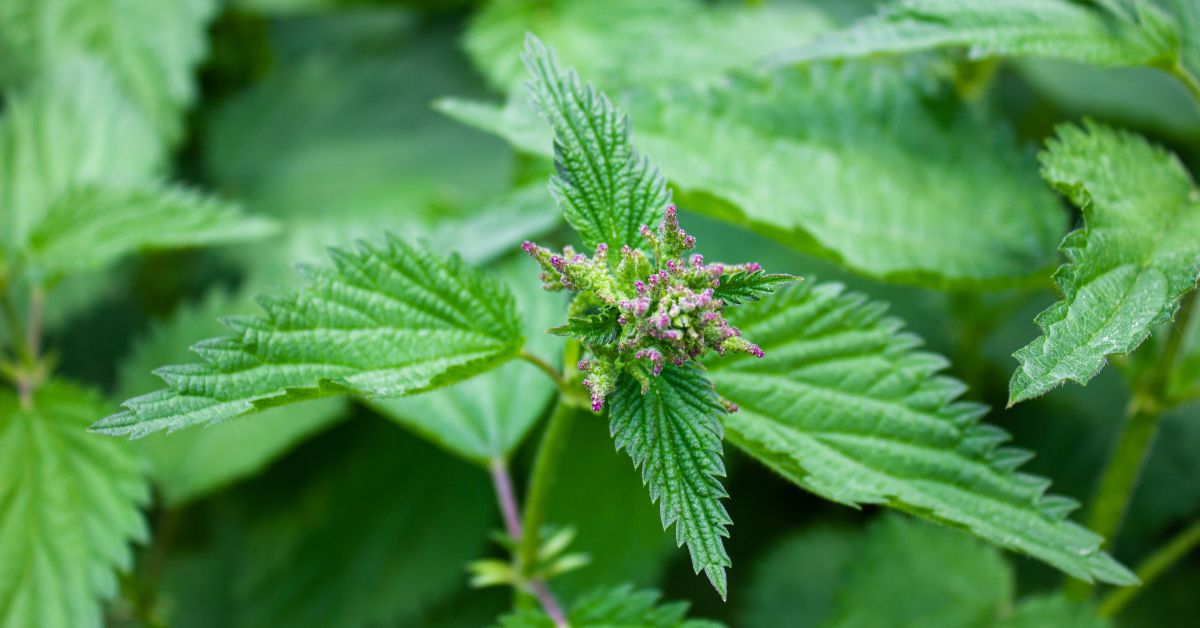
Many people know stinging nettle simply as a weed, yet in phytotherapy it is considered one of the most versatile medicinal herbs. It has been used for centuries for urinary tract complaints, rheumatic conditions, and general cleansing regimens. What makes nettle especially interesting is that not only its leaves and shoots are valuable, but also its root — which is used for entirely different purposes.
Nettle is unique because it is simultaneously:
- rich in minerals
- mildly diuretic
- anti-inflammatory
- and supportive of urinary tract health.
What is stinging nettle?
Stinging nettle (Urtica dioica) is a widely distributed medicinal plant whose:
- leaves
- shoots
- and roots
are all used in phytotherapy.
Different parts of the plant contain different active compounds, which is why they are used for different health concerns.
Active compounds in the shoots and leaves
Nettle shoots and leaves are rich in:
- plant acids
- flavonoids
- minerals
- histamine
- serotonin
- acetylcholine
Together, these compounds contribute to the plant’s:
- diuretic
- anti-inflammatory
- general supportive
effects.
Nettle is especially rich in minerals such as:
- iron
- potassium
- silica.
The uniqueness of nettle root
Nettle root contains different active compounds than the aerial parts.
Its most important constituents include:
- plant sterols
- particularly beta-sitosterol.
The root is primarily used for the symptomatic treatment of:
- benign prostatic hyperplasia (BPH).
Mild diuretic effect
One of nettle’s best-known properties is its mild diuretic action.
It may help:
- increase urine output
- support flushing of the urinary tract
- reduce fluid retention.
For this reason, it is often used for:
- urinary tract complaints
- susceptibility to kidney gravel
- cleansing regimens.
Urinary tract complaints and kidney gravel
Traditionally, nettle shoots have been used for:
- inflammatory conditions of the lower urinary tract
- mild urinary complaints
- kidney gravel tendencies.
Increased urine flow may:
- support cleansing of the urinary tract
- help eliminate stagnant substances.
Rheumatic complaints
One of nettle’s classic uses is as supportive therapy for rheumatic conditions.
Due to its anti-inflammatory and diuretic properties, it may:
- support joint health
- help reduce certain uncomfortable symptoms.
In folk medicine, nettle was also used externally for rheumatic complaints.
Benign prostate enlargement
The best-known use of nettle root is the symptomatic treatment of stage I and II benign prostatic hyperplasia (BPH).
It may help:
- reduce frequent urination
- support bladder emptying
- relieve certain uncomfortable symptoms.
The root is most commonly used in:
- tinctures
- standardized herbal preparations.
Anti-inflammatory properties
The flavonoids and other compounds in nettle may:
- contribute to reducing inflammatory processes.
Because of this, nettle may be useful not only for urinary tract complaints, but also for more general inflammatory conditions.
How is it used?
As a tea
Nettle leaves and shoots are most commonly consumed as herbal tea.
General preparation:
- pour hot water over 1–2 teaspoons of dried herb
- let steep for about 10 minutes.
As a tincture
Nettle root is often used in:
- tinctures
- standardized extracts.
What should you pay attention to?
Although nettle is a highly versatile herb, it is not suitable for everyone.
It is not recommended during:
- pregnancy.
Possible side effects
Nettle may:
- lower blood sugar levels
- stimulate blood clotting.
Therefore, it should be used cautiously alongside certain medications.
Excessive consumption
In larger amounts, nettle may cause:
- hives
- skin irritation.
Individual reactions
Some individuals may experience opposite or unexpected reactions, so it is advisable to introduce nettle gradually.
When can stinging nettle be useful?
Nettle may be especially beneficial if:
- urinary tract complaints are present
- mild diuretic support is needed
- rheumatic issues occur
- there is a tendency toward kidney gravel
- prostate support is desired.
Stinging nettle is one of the most versatile medicinal herbs, traditionally used for urinary tract issues, rheumatic complaints, and prostate-related symptoms. Different parts of the plant offer different benefits, making nettle far more than a simple “single-purpose” herb.
When used properly, it can be a valuable addition to a natural home herbal toolkit — though mindful and cautious use remains important.