
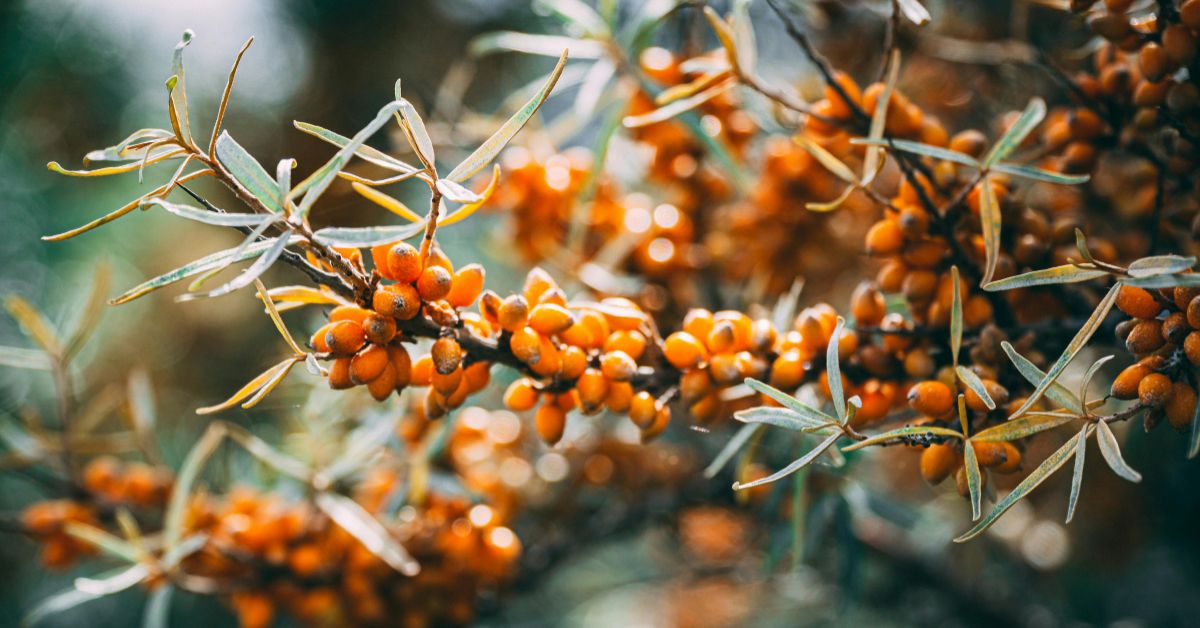
If there is a plant often referred to as a “vitamin bomb,” it is sea buckthorn. But its value goes far beyond its high vitamin C content. Sea buckthorn supports the immune system, may aid regeneration, and can also be useful externally for skin-related concerns. For this reason, it is worth considering not only during cold season.
What is sea buckthorn?
Sea buckthorn (Hippophae rhamnoides) is a plant with bright orange berries, whose ripe fruits are used for medicinal purposes. The berries are exceptionally rich in active compounds, making them one of the most versatile natural immune-supporting plants.
Its main active components include:
- carotenoids
- vitamin C
- B vitamins
- vitamin E
- flavonoids
This combination provides antioxidant protection while supporting the body’s defense mechanisms.
How does it work?
Sea buckthorn works through multiple mechanisms.
Its high vitamin C content:
- supports the immune system
- helps the body defend against infections
Carotenoids and flavonoids:
- have strong antioxidant effects
- protect cells from oxidative stress
Vitamin E:
- contributes to cellular regeneration
- supports skin health
As a result, sea buckthorn does not target just one issue but supports the body on several levels.
Supporting the immune system
One of the best-known uses of sea buckthorn is immune support.
It may be especially useful:
- during periods of infection
- in colds
- as complementary support in febrile conditions
- in weakened states
Regular consumption may help maintain the body’s resilience.
Colds and recovery
Sea buckthorn is not an immediate symptom-reliever but rather supports the body during recovery.
It may help:
- speed up regeneration
- strengthen the immune response
For this reason, it is often used:
- as a course
- for prevention as well
Skin support – internal and external use
One of the unique features of sea buckthorn is that it can be used both internally and externally.
The fatty oil extracted from its seeds:
- may support wound healing
- reduce inflammation
- promote skin regeneration
It may be used for:
- burns
- wounds
- pressure sores
- irritated skin
Its skin-supporting effects are due to both its antioxidant content and fatty acids.
Anti-inflammatory and regenerative effects
The active compounds in sea buckthorn may contribute to:
- reducing inflammatory processes
- supporting tissue regeneration
This can be particularly important:
- during recovery after illness
- in case of injuries
How to use sea buckthorn
Sea buckthorn is available in several forms:
Tea
Less common, but can be prepared from dried fruit.
Juice or syrup
One of the most popular forms, easy to incorporate into daily routines.
Supplements
Capsules, extracts, or concentrated forms.
Oil
Used externally for skin concerns, often as part of creams or ointments.
What should you be aware of?
Although sea buckthorn is valuable, it is not suitable in all cases.
Contraindications:
- gastric or duodenal ulcers
- gallstones
Excessive consumption:
- may cause digestive discomfort
For this reason, it is best to:
- use it in moderation
- apply it as a course
When should you choose sea buckthorn?
Sea buckthorn may be a good choice if you:
- want to support your immune system
- are frequently ill
- want to speed up recovery
- are looking for a natural solution for skin issues
Sea buckthorn is one of the best-known natural immune-supporting plants for a reason. Its value lies not only in its vitamin content but in its complex, multi-level support for the body. Internally, it strengthens immune function, while externally it may promote skin regeneration.
When used consciously and in moderation, sea buckthorn can be a versatile and valuable addition to everyday health support.