
There is a kind of inner restlessness that is hard to describe. You may not be ill, yet you feel more tired, sleep becomes more difficult, and it seems like your body is constantly “on alert.” In such moments, many people look for a more natural form of support. Orange blossom essential oil often comes into focus in these situations: it is not overpowering or intrusive, yet it has a noticeable effect on overall well-being.
What is orange blossom essential oil?
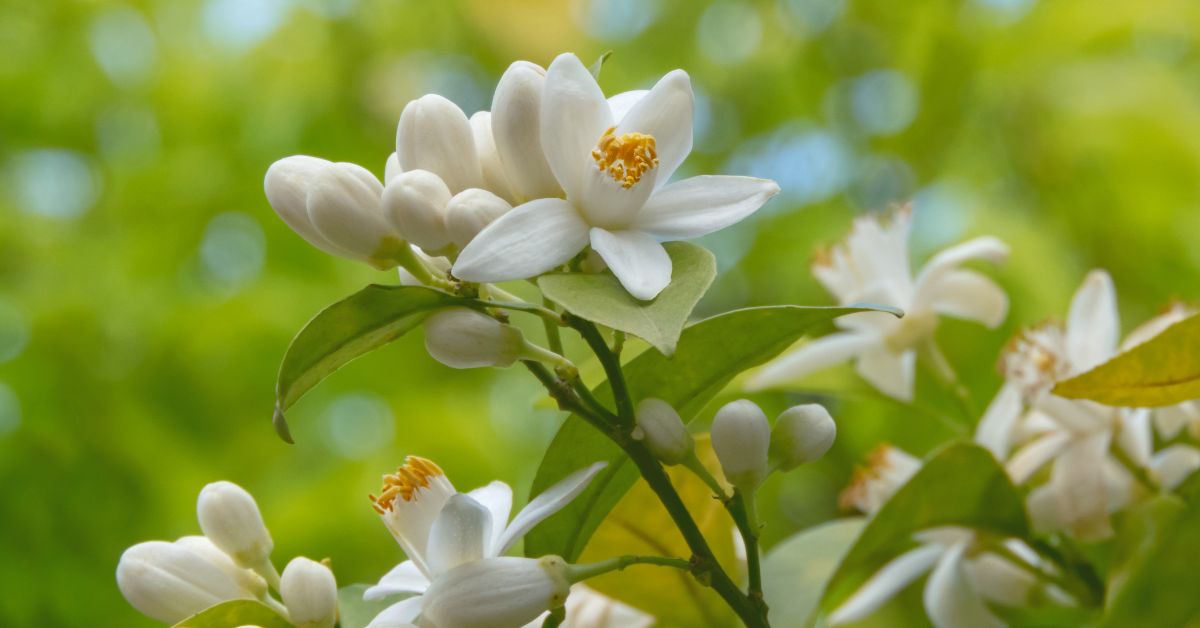
Orange blossom essential oil (Aetheroleum citri aurantii floris) is derived from the fresh flowers of Citrus aurantium. The plant belongs to the Rutaceae family and is mainly cultivated in the Far East and Mediterranean regions.
The oil is obtained in two ways:
- steam distillation
- enfleurage
Enfleurage is a traditional, gentle extraction method. Fresh flowers are placed in fat or an oily base, which absorbs their aromatic compounds. At the end of the process, the essential oil is extracted from this fragrance-infused fat. This method was especially used for delicate flowers, as it preserves the plant’s original aroma.
The oil is pale yellow, with a sweet, floral, soft yet distinctive scent.
Main active compounds:
- linalool
- linalyl anthranilate
- nerol
- limonene
- terpineol
When “everything feels too much”
One of the most important uses of orange blossom essential oil is supporting the nervous system. It is not a strong sedative, but rather gently helps restore balance.
It may be used for:
- restlessness
- stressful periods
- nervous exhaustion
- relieving tension
It does not numb or slow you down, but instead helps ease internal tension.
Sleep support
When falling asleep is difficult or sleep is not restful, orange blossom essential oil is often considered.
It may help with:
- falling asleep more easily
- improving sleep quality
- reducing evening overstimulation
When diffused or used before bedtime, it may support better sleep.
Effects on mood
Orange blossom essential oil not only calms but also has a mild mood-enhancing effect.
It may be used for:
- fatigue
- low mood
- lack of motivation
It is not strongly stimulating, but rather provides a gentle balancing effect.
Skin and cosmetic use
Orange blossom essential oil is also popular in skincare.
It may:
- support skin regeneration
- help achieve a more even complexion
- have anti-inflammatory effects
It is often used for sensitive skin as well, always in diluted form.
Antimicrobial and general supportive effects
Orange blossom essential oil has mild antimicrobial properties and may help purify the environment when diffused.
It is also considered to have a general strengthening effect, especially during periods of exhaustion and stress.
How to use it
Orange blossom essential oil should always be diluted.
Basic dilution ratio:
- 1 tablespoon carrier oil (almond, jojoba, olive, or grapeseed oil)
- 3–5 drops essential oil
Methods of use:
- diffusion
- added to bath water
- as a massage oil
- as part of skincare
Safety considerations
Orange blossom essential oil is generally well tolerated, but:
- always perform a patch test before first use
- use with extra caution on sensitive skin
- do not use undiluted
Orange blossom essential oil is not a “quick fix.” Rather, it is a gentle yet effective tool that helps restore inner balance.
If restlessness, sleep problems, or exhaustion are present, it may be worth exploring this soft yet powerful essential oil.