
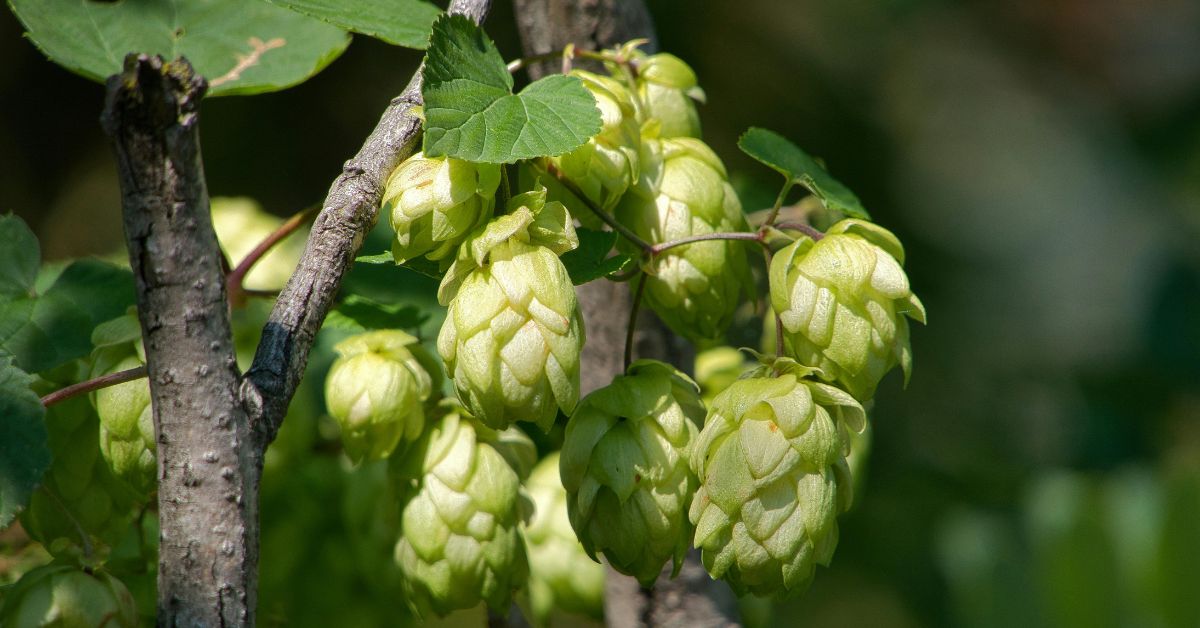
When you can’t wind down in the evening, your thoughts keep racing, and sleep always seems to come later than it should, it’s tempting to look for an instant fix. Yet there are medicinal herbs that work more gently, but still effectively, helping you return to a state of calm. Hops is one of them: it doesn’t “knock you out,” but helps you relax and gradually supports falling asleep.
What is hops?
Hops (Humulus lupulus) is best known from beer production, but it has long been used in phytotherapy as a medicinal herb. For therapeutic purposes, the female flower cones of the plant are used.
Its main active compounds include:
- bitter substances
- essential oils
These components give hops its characteristic calming and mild digestive-supporting effects.
How does it work?
The primary effect of hops is on the nervous system.
Its essential oils and bitter compounds:
- help relax the nervous system
- may reduce inner tension
- support more restful sleep
It does not act as a sleeping pill. Instead, it:
- slows down excessive nervous activity
- helps the body shift into a resting state
This makes it especially useful when sleep problems are linked to stress or overstimulation.
Restlessness and tension – when it’s hard to switch off
Hops is often used for:
- nervous tension
- inner restlessness
- stressful periods
Its effects may:
- ease mental tension
- help you “switch off” at the end of the day
This is particularly valuable when the issue is not a specific problem, but a general state of being overstimulated.
Sleep disorders – gentle, natural support
One of the best-known uses of hops is supporting sleep.
It may help with:
- difficulty falling asleep
- light, non-restorative sleep
- frequent nighttime awakenings
Its advantage is that it:
- does not cause a sudden “shutdown”
- supports relaxation gradually
This makes it suitable for longer-term use.
Not just calming: it also supports digestion
The bitter compounds in hops also affect the digestive system.
It may help with:
- loss of appetite
- slow digestion
The bitter taste:
- stimulates digestive juices
- supports stomach function
This effect is less well known but still an important part of hops’ overall profile.
How to use it
Tea
- Pour hot water over 1 teaspoon of dried hop cones
- Let steep for 10–15 minutes
- Best consumed before bedtime
Its taste is characteristically bitter — which is part of its effect.
Hop pillow
A unique and gentle method of use:
- fill a small textile bag with dried hop cones
- place it near or under your pillow
Its aroma:
- promotes relaxation
- supports falling asleep
What should you be aware of?
Some important considerations when using hops:
- not recommended alongside antidepressants (may reduce their effect)
- may enhance the effect of strong sedatives
For regular use, it’s advisable to proceed with caution.
When should you choose hops?
Hops can be a great choice if:
- you have difficulty falling asleep
- you feel overstimulated or “wired”
- you’re going through a stressful period
- you have mild digestive complaints
Hops is a versatile yet often underrated medicinal herb. It is best known for its calming and sleep-supporting effects, but it also benefits digestion.
If you’re not looking for a drastic solution to sleep problems, but rather a gentle, natural form of support, hops is definitely a plant worth incorporating into your evening routine.