

A sore throat is a common complaint that can develop for many reasons — from colds and influenza to allergies or even overusing the voice. Many people look for natural remedies that are both effective and gentle on the body. Agrimony (Agrimonia eupatoria), once known as the “herbal tea of singers,” is one such traditional solution. In this article, we explore why agrimony can be an excellent natural choice for soothing throat discomfort.
What is agrimony?
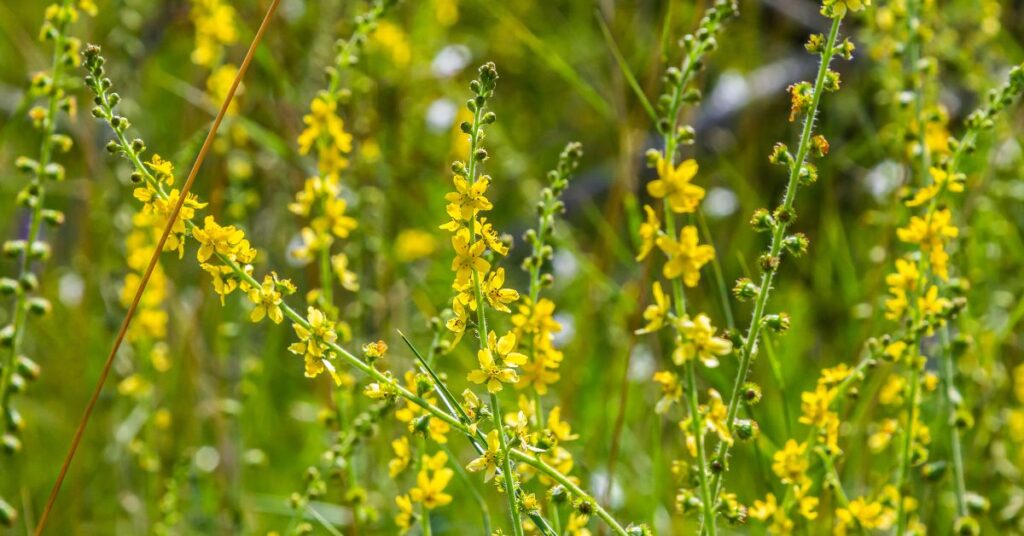
Agrimony is a perennial plant belonging to the rose family (Rosaceae), widely distributed across Europe, Asia, and North America. It can easily be recognized by its small yellow flowers and slightly hairy stem.
For medicinal purposes, the flowering aerial parts of the plant are collected. These contain valuable active compounds, including:
- Tannins (9–15%)
- Flavonoids
- Silicic acid derivatives
These substances are responsible for agrimony’s anti-inflammatory, antibacterial, and astringent properties.
How does agrimony help with sore throat?
Agrimony supports throat health through several complementary mechanisms.
1. Astringent effect
The high tannin content gives agrimony its astringent action. This helps tighten and protect irritated mucous membranes, reducing inflammation and soothing sensitive throat tissues. This effect can be beneficial whether the irritation is caused by infection or mechanical strain.
2. Anti-inflammatory action
Flavonoids such as luteolin possess strong anti-inflammatory properties. They help decrease swelling and redness in the throat, easing discomfort and promoting recovery.
3. Antibacterial properties
Agrimony also exhibits antibacterial activity, which may assist the body in fighting infections responsible for sore throat, including bacterial pharyngitis or tonsillitis.
A pleasant-tasting herbal tea
One of agrimony’s advantages is its mild, pleasant taste, making it suitable even for children. The tea can be consumed without additional flavoring while helping soothe irritated tissues and support hydration.
How to prepare agrimony tea
- Add one teaspoon of dried agrimony to a cup.
- Pour over 250 ml of hot water.
- Cover and let steep for 10–15 minutes.
- Strain and drink warm.
Tip
Agrimony tea is especially effective when used as a gargle, allowing the active compounds to reach inflamed areas directly. For gargling, prepare a stronger infusion using two teaspoons of dried herb.
Who can benefit from agrimony?
Agrimony is generally considered safe and can be used by people of all age groups, including children. Its natural origin makes it particularly appealing for those who prefer to avoid throat lozenges or sprays containing artificial ingredients.
Recommended uses include:
- throat irritation caused by allergies
- sore throat associated with colds or influenza
- tonsillitis
- voice strain (for singers, teachers, or speakers)
A gentle herbal ally for throat care
Agrimony is a versatile medicinal herb that offers a natural and effective approach to relieving sore throat symptoms. Its accessibility, pleasant taste, and soothing properties have earned it the long-standing reputation as the herb of singers.
Whether dealing with a seasonal cold, inflamed tonsils, or simply protecting overworked vocal cords, agrimony can provide gentle yet reliable support for throat health.