Persistent coughing, throat irritation, and hoarseness can be not only uncomfortable but truly exhausting. In phytotherapy, medicinal herbs that soothe and protect irritated mucous membranes are often preferred over harsher approaches. Coltsfoot is one of these traditional remedies. For centuries, coltsfoot has been used for respiratory complaints, especially productive coughs and throat irritation. However, it is also a herb that requires conscious and short-term use, as some of its active compounds make prolonged consumption unsafe.
What is coltsfoot?
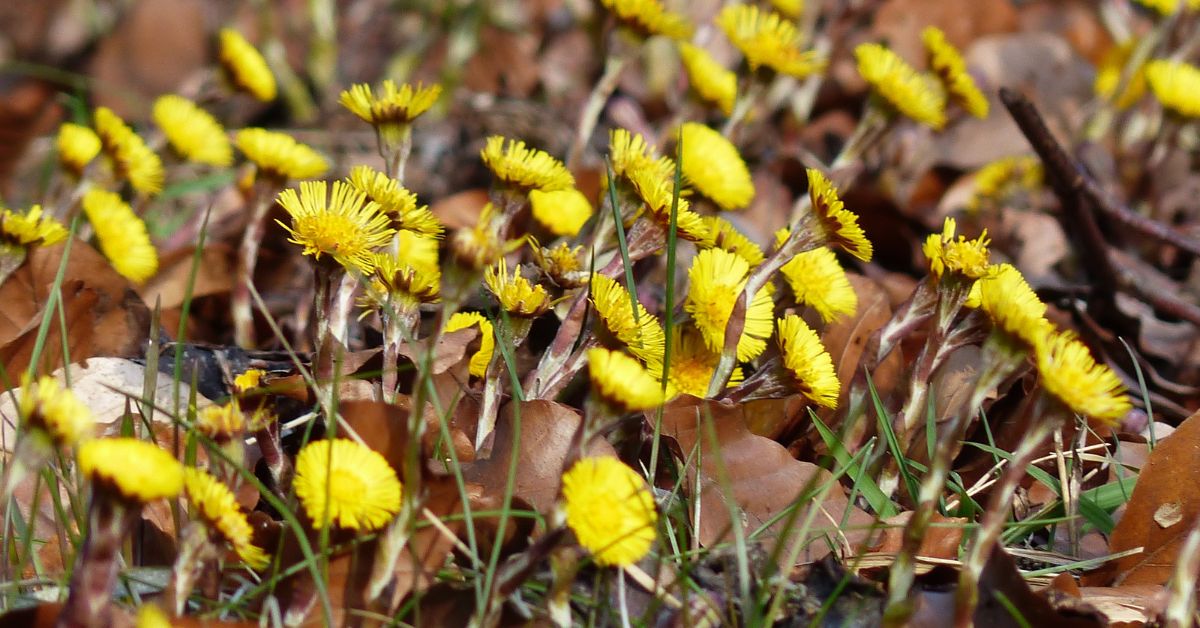
Coltsfoot (Tussilago farfara L.) is a long-known medicinal herb primarily used in the form of:
- fresh flowers
- leaves
Its main active compounds include:
- flavonoids
- mucilage compounds
- tannins
- bitter substances
Together, these compounds provide coltsfoot with its:
- mucosa-coating
- anti-inflammatory
- expectorant
effects.
How does coltsfoot work?
One of the most important properties of coltsfoot is its high mucilage content.
These mucilage compounds:
- coat irritated mucous membranes
- may reduce the scratching or burning sensation
- form a protective layer
This can be especially helpful in cases of:
- coughing
- throat irritation
- hoarseness
The flavonoids and tannins also have anti-inflammatory properties and may help calm irritated tissues.
In addition, coltsfoot has expectorant effects, meaning it may help loosen and eliminate mucus from the respiratory tract.
Cough and respiratory catarrh
The best-known application of coltsfoot is supporting respiratory health.
It is traditionally used for:
- productive cough
- respiratory catarrh
- hoarseness
Thanks to its soothing, coating effects, coltsfoot may:
- reduce throat irritation
- ease the urge to cough
Its expectorant action may also help clear mucus more effectively.
Hoarseness and sore throat
Coltsfoot has long been associated with:
- hoarseness
- throat irritation
- vocal strain
It may be particularly useful during:
- periods of heavy voice use
- irritation caused by dry air
- cold and flu season
Mouth and throat inflammation
Coltsfoot is not used only internally.
As a tea, it may also be used for:
- gargling
- mouth rinses
This may help relieve:
- mild inflammation of the oral mucosa
- throat irritation
- sensitive mucous membranes
Digestive mucosal irritation
A lesser-known use of coltsfoot is supporting irritated digestive mucosa.
Because of its mucilage content, it may:
- coat irritated tissues
- reduce irritation
For this reason, it has occasionally been used for mild inflammatory conditions affecting the stomach and intestines.
How is coltsfoot used?
Tea
The most common form of use is coltsfoot tea.
General preparation:
- pour hot water over 1–2 teaspoons of dried herb
- let steep for 10–15 minutes
It is primarily used for:
- cough
- throat complaints
- hoarseness
Gargling
The cooled tea may also be used for:
- gargling
- mouth rinses
What should you pay attention to?
Careful use of coltsfoot is extremely important.
The plant contains:
- pyrrolizidine alkaloids
These compounds may have liver-damaging effects.
For this reason, coltsfoot should only be used:
- for short periods
- generally no longer than about 2 weeks
Long-term continuous use is not recommended.
When may coltsfoot be useful?
Coltsfoot may be particularly beneficial when:
- the throat is irritated
- productive cough is present
- hoarseness develops
- a mucosa-coating effect is needed
Coltsfoot is a classic medicinal herb for respiratory support. Thanks to its mucosa-protective, anti-inflammatory, and expectorant properties, it has been used for centuries for coughs, hoarseness, and throat irritation.
Rather than aggressively suppressing symptoms, it helps protect and soothe irritated mucous membranes. However, because of its pyrrolizidine alkaloid content, coltsfoot should always be used consciously and only for short-term support.