
There’s that kind of cough that just won’t go away. Or the stomach discomfort that keeps coming back again and again. In such cases, many people focus only on symptomatic solutions, yet there are medicinal herbs that support the body from multiple angles at once. Licorice is one of them — and it’s no coincidence that it has long been used for both respiratory and digestive problems.
What is licorice?
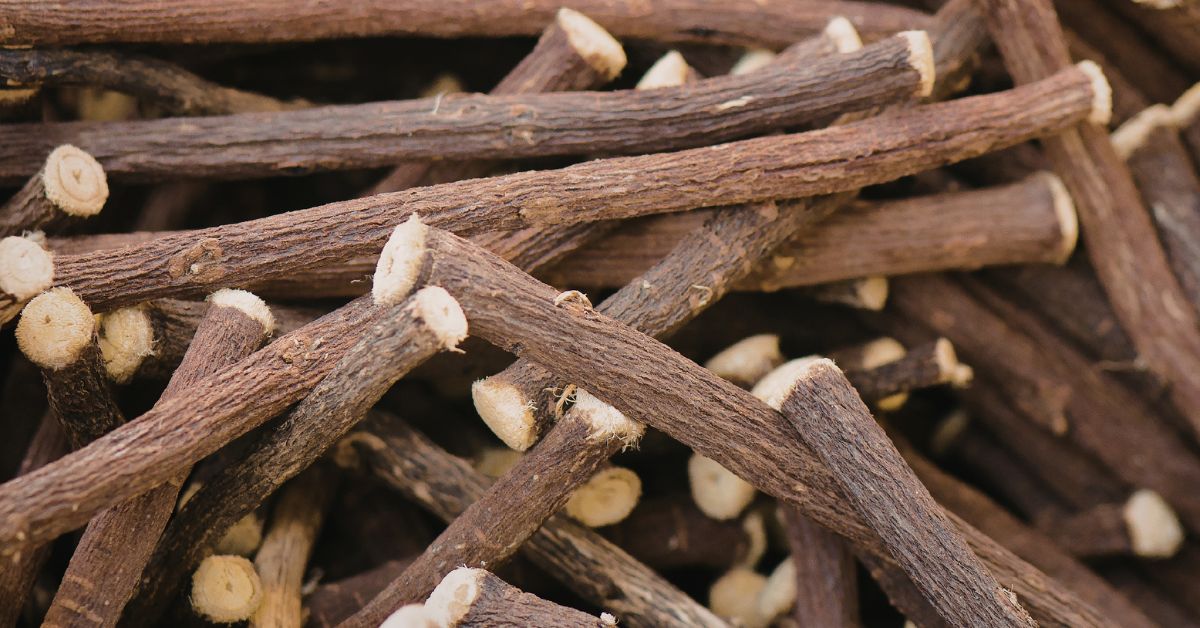
Licorice (Glycyrrhiza glabra) is a perennial plant whose root is used for medicinal purposes. Its characteristic sweet taste comes from glycyrrhizin.
Main active compounds:
- glycyrrhizin
- flavonoids
- triterpene saponins
Together, these give licorice its versatile effects.
How does it work?
Licorice acts on multiple levels in the body.
Mucosal protection:
It stimulates mucus production, which coats and protects mucous membranes — both in the stomach and the respiratory tract.
Reduced pepsin activity:
In the stomach, it can reduce pepsin activity, helping to decrease irritation of the mucosal lining.
Anti-inflammatory effect:
Flavonoids and saponins help reduce inflammatory processes.
Expectorant effect:
It helps loosen and clear mucus from the airways.
Respiratory issues – when the cough won’t go away
One of the best-known uses of licorice is for respiratory conditions.
It may help with:
- dry cough
- productive cough
- throat irritation
- colds
It both soothes irritated mucous membranes and supports mucus clearance.
Application
It is most commonly used as a decoction or syrup.
Support for gastric and duodenal ulcers
Another important area of use for licorice is the stomach.
It may be used for:
- gastric ulcers
- duodenal ulcers
- stomach irritation
By increasing mucus production, it coats the stomach lining and helps protect it from acidic conditions.
Digestive complaints
Licorice can also be helpful beyond ulcers.
It may support:
- heartburn
- sensitive stomach
- excess stomach acid
These effects are mainly based on mucosal protection and reducing inflammation.
How to use it
Licorice can be used in several forms:
Decoction:
- place 1 teaspoon of chopped root in cold water
- boil for 5–10 minutes
- strain before use
Tincture:
- a concentrated extract used in smaller amounts
Preparations:
- capsules
- syrups
- combined herbal products
Safety considerations
Licorice requires careful use.
Possible side effects:
- sodium and water retention
- potassium loss
- edema
- high blood pressure
Not recommended in cases of:
- hypertension
- heart or kidney disease
- pregnancy
- long-term, continuous use
Licorice is a versatile medicinal herb that supports both the respiratory and digestive systems. Thanks to its expectorant, anti-inflammatory, and mucosal-protective effects, it can be especially useful for cough and stomach complaints.
If you’re looking for a solution that doesn’t just target one symptom but supports the body more broadly, licorice can be a good choice — when used with proper care.