One of nature’s oldest miracle remedies—one that even ancient civilizations used with enthusiasm—is propolis. This balsamic substance, collected and produced by bees, is not only the guardian of the hive, but also offers extraordinary health benefits for the human body. But why did Aristotle call it “the tears of trees”? How can it help relieve a wide range of complaints, from sore throat to wound healing? If you’re curious about the secrets of propolis, join me and let’s explore this wonderful natural medicine together.
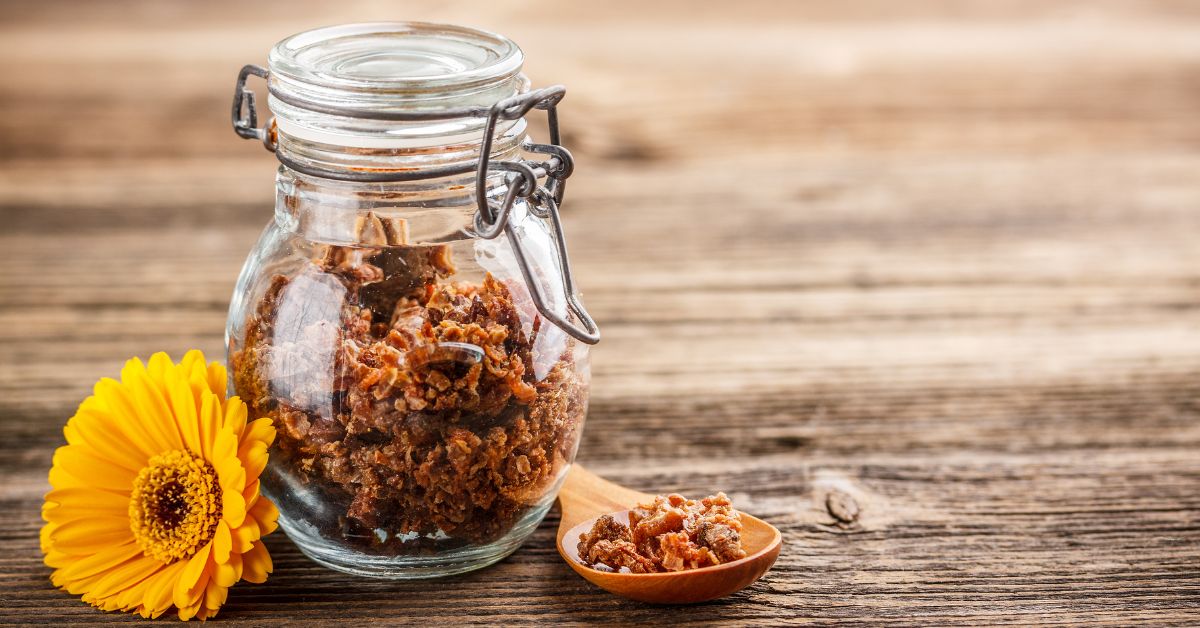
Propolis, also known as bee glue, is a special natural substance produced by bees. Its name means “in front of the city” (Greek origin), which refers to the fact that bees build a barrier from propolis at the entrance of the hive, protecting their home from pathogens and intruders. This substance has a balsamic scent, a hard, waxy feel, and is considered the strongest natural disinfectant of natural origin.
How propolis is made and its role in the life of bees
Bees produce propolis from balsam-like substances collected from various plants—mainly poplar, conifers, birch, oak, willow, alder, hornbeam, elm, chestnut, and cherry. They mix it with wax and their own enzymes, creating the resinous substance that forms the basis of the hive’s defense system.
Bees coat the inner walls of the hive, the inside of cells, and the joints of the frames with propolis. In this way, they not only strengthen the structure of the hive but also prevent infectious diseases from entering.
Historical and folk medicinal uses of propolis
Propolis has been used for thousands of years in many cultures. Aristotle called it “the tears of trees,” while in Georgian folk medicine small pieces of propolis were placed on newborns’ navels for disinfection, and children’s toys were also coated with it. In the past, fairground tooth-pullers also used propolis for pain relief and disinfection.
The chemical composition of propolis
The composition of propolis is not constant; it can vary depending on plant origin and the season. The main components are:
- Essential oils: 0.1–8%
- Fatty acids: 3–5%
- Flavonoids: 12–50%
- Phenols: 12–50%
- Polysaccharides: 2–20%
- Other constituents: 5–22%
The main components of propolis are divided into three major groups according to their alcohol solubility:
- Waxes: soluble in 96% alcohol and petroleum ether
- Resins: soluble in 96% alcohol
- Balsams: soluble in 70% alcohol
Finished propolis extracts are often standardized; for example, they are marketed with an alcohol content of 80%.
The health effects of propolis
Propolis has unique properties that provide a natural solution for many health problems.
Antimicrobial effect
Propolis can inhibit the growth of bacteria, viruses, and fungi. It works mainly by blocking cell division and protein synthesis.
Antiviral activity
- Against rhinoviruses that cause the common cold, both aqueous and ethanolic extracts proved effective.
- Against the herpes virus, only the ethanolic extract was effective.
- Research has shown that the antioxidant effect of the ethanolic extract is significant, thanks to its flavonoid content.
Immunostimulant effect
Both aqueous and ethanolic extracts stimulate the proliferation of white blood cells and increase IgM levels, which plays a role in strengthening the immune system.
Skin care and wound-healing effect
Propolis has wound-treating and anti-inflammatory properties, which is why it is used in creams and ointments for:
- Burns
- Cuts
- Eczema, psoriasis, acne
- Fungal skin infections
Dental and oral care
Propolis is used in lozenges for treating throat inflammation and inflammation of the oral mucosa. For children, an aqueous solution is also available.
Treatment of digestive and urological complaints
- Against gastritis, ulcers, and colitis
- For the treatment of urinary tract infections and inflammations
Storage and stability
Propolis preparations are sensitive to high temperatures, UV light, and oxygen in the air, which can also be seen in the darkening of their color. Therefore, they should be stored in brown pharmacy glass at room temperature.
Propolis is a natural, powerful disinfectant that has been used for thousands of years for health preservation and healing. Whether it’s infections, wound care, immune support, or even dental care, propolis provides an effective solution. Following dosage rules, it can be used safely long-term—except for those who are allergic to bee products or alcohol-based extracts.