Not every essential oil is what it seems at first. Many people think of ylang-ylang simply as a “nice fragrance,” yet it offers much more than that. It can help you slow down, ease tension, and even influence the condition of your skin — and it works quite differently from most essential oils. If you’ve only thought of it as a scent, it’s worth taking a closer look.
What is ylang-ylang essential oil?
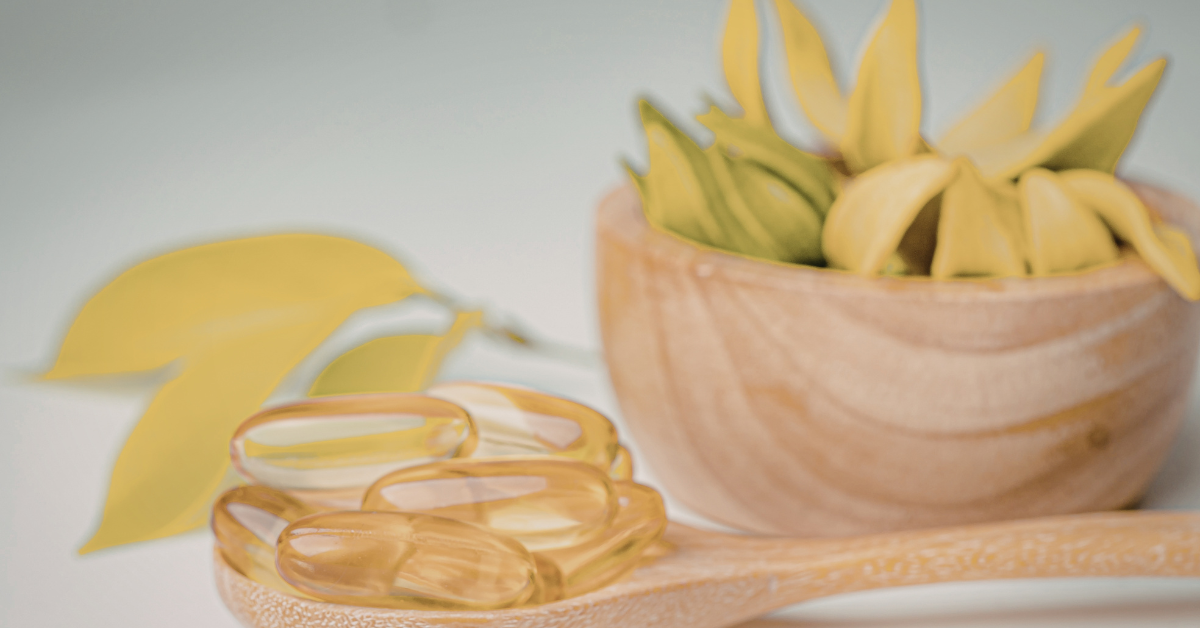
Ylang-ylang essential oil (Aetheroleum canangii) is produced from the flowers of Cananga odorata var. genuina through steam distillation. The plant belongs to the Annonaceae family and is native primarily to the Philippines and Madagascar.
The flowers are white or slightly pinkish and naturally emit a strong, sweet fragrance. The essential oil itself has a rich, floral, slightly exotic aroma, which is why it is widely used in perfumery.
Its main active compounds include linalool, geranyl derivatives, benzyl acetate, and cresol, which together give the oil its characteristic effects.
When you need to slow down
One of the most well-known effects of ylang-ylang essential oil is its ability to ease tension. It doesn’t “knock you out” or dull your senses — instead, it gently calms overstimulation.
It can be especially helpful:
- after stressful days
- in cases of nervous tension
- when it’s difficult to switch off
Its aroma works through the nervous system, helping restore a calmer, more balanced state.
Supporting focus — but not on its own
It may sound surprising, but ylang-ylang is not only calming; in the right combinations, it may also support concentration.
On its own, it tends to relax, but when blended with other essential oils (such as citrus or more refreshing scents), it can help create a balanced, focused mental state. This is why it is often used in aromatherapy blends for studying or work.
Why it’s considered an aphrodisiac
Ylang-ylang essential oil is often associated with aphrodisiac effects. This is not due to a direct stimulating action, but rather its ability to reduce tension and promote relaxation.
This alone can make a significant difference, as stress is often one of the biggest barriers to intimacy.
Also valuable in skincare
Ylang-ylang essential oil is also used in cosmetics because it may help maintain the skin’s natural balance.
It can be particularly useful for:
- oily or combination skin
- skin that feels “out of balance”
- supporting minor skin concerns
It doesn’t dry out the skin — instead, it helps restore balance, making it a versatile option.
How to use it in everyday life
Ylang-ylang essential oil can easily be incorporated into your daily routine in several ways.
Diffusion
- helps promote relaxation
- creates a calm, pleasant atmosphere
- especially suitable for evening use
Massage oil
add 4–5 drops of essential oil to 1 tablespoon of carrier oil (such as almond, jojoba, coconut, or grapeseed oil)
may help relax both muscles and the nervous system
Skincare
- mixed into creams or oils
- may help restore the skin’s balance
What to pay attention to
Ylang-ylang essential oil has a strong aroma, so only a small amount is needed.
- always use it diluted
- perform a patch test before use
- in excessive amounts, it may cause headaches or nausea
Ylang-ylang essential oil is much more than just a pleasant fragrance. It can help you relax, improve mood, support concentration, and contribute to skincare.
When used consciously, it becomes a simple yet effective tool to help you slow down and reconnect with your natural rhythm.