
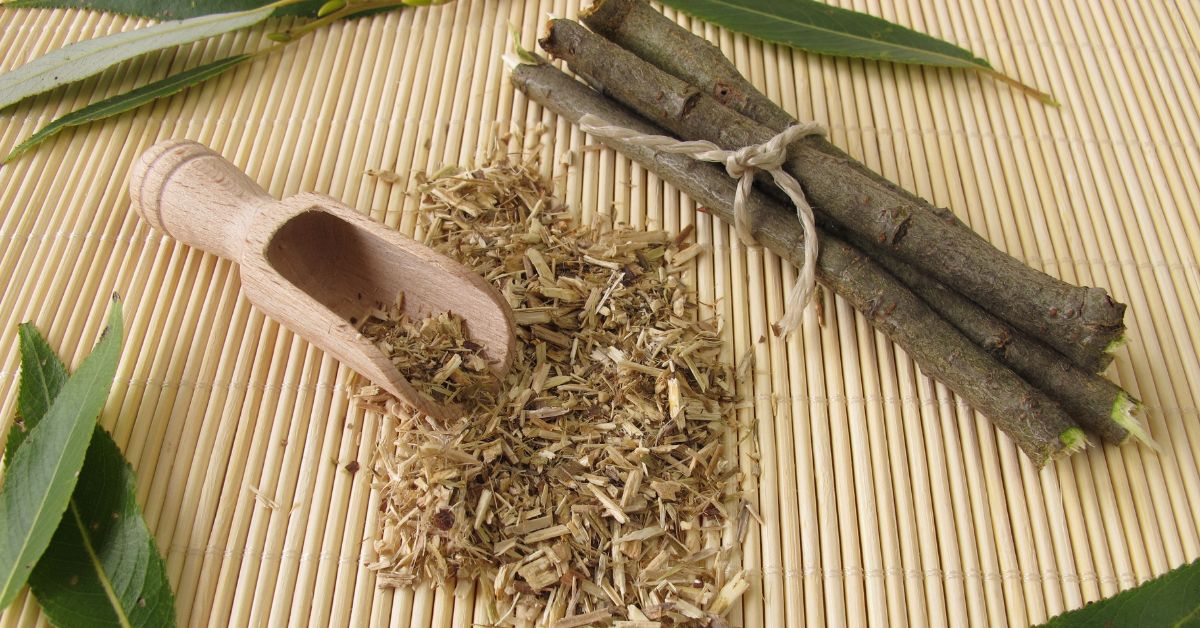
Aspirin is one of the best-known and most widely used medications in the world for pain relief, reducing inflammation, and lowering fever. However, many people today are looking for natural alternatives instead of synthetic drugs. One such option is willow bark (Salix cortex), a medicinal remedy known for its healing properties for thousands of years. In this article, we explore the benefits of willow bark, its uses, and how it may serve as an effective natural alternative to aspirin.
Active compounds and mechanism of action
The primary active compound in willow bark is salicin, a glycoside of salicylic acid. During digestion, salicin is converted into salicylic acid, which provides pain-relieving and anti-inflammatory effects. Willow bark also contains tannins, which further contribute to its anti-inflammatory properties.
Salicin and salicylic acid
Due to its chemical structure, willow bark works in a way similar to aspirin. In the digestive system, salicin transforms into salicylic acid, which inhibits the synthesis of prostaglandins—substances responsible for inflammation and pain—thereby reducing both symptoms.
Tannins
The tannins found in willow bark have antioxidant and anti-inflammatory effects, enhancing the overall effectiveness of salicin.

Harvesting and processing willow bark
Harvesting
Willow bark is typically collected in early spring, between March and May, when it can be most easily removed from the branches. All willow species contain active compounds, but white willow (Salix alba) has the highest concentration of salicin.
Processing
Freshly collected bark should be chopped or ground, as it dries slowly in larger pieces. In this processed form, the active compounds dissolve more efficiently. A decoction made from willow bark has a reddish color and a naturally bitter taste, which can be sweetened with honey if desired.
Ways to use willow bark
Decoction
A willow bark decoction is one of the most common methods of use.
Ingredients
- 1 tablespoon chopped willow bark
- 250 ml water
Preparation
- Place the willow bark in a pot.
- Add water and bring it to a boil.
- Simmer gently for 10–15 minutes.
- Strain and allow it to cool slightly.
The decoction may be consumed 2–3 times daily, optionally sweetened with honey.
Tea
Willow bark can also be prepared as tea. In this case, boil the water first, then pour it over the bark and let it steep for about 10–20 minutes. The flavor is slightly bitter but can be improved with honey or lemon.
Compresses and poultices
Willow bark decoction may also be applied externally as a compress or poultice to help treat skin inflammation, joint pain, and minor wounds.
Bath
Adding willow bark decoction to bathwater may provide whole-body anti-inflammatory and pain-relieving effects.
Advantages of willow bark compared to aspirin
Natural origin
Because willow bark is naturally derived, many people prefer it over synthetic aspirin, especially those who wish to avoid artificial additives and chemicals.
Gentler on the stomach
Although willow bark contains salicylic acid, it generally causes less stomach irritation than aspirin. This can be beneficial for individuals sensitive to the gastrointestinal side effects of nonsteroidal anti-inflammatory drugs (NSAIDs).
Versatile use
Willow bark can be used both internally (as tea or decoction) and externally (compresses, poultices, baths), offering a wide range of applications.
Contraindications and warnings
Despite its many benefits, willow bark is not suitable for everyone:
- Pregnancy: Consumption is not recommended during pregnancy, as salicylic acid may negatively affect the fetus.
- Salicylate sensitivity: Individuals sensitive to salicylates should avoid using willow bark.
- Cardiovascular prevention: Willow bark should not be used for cardiovascular prevention, as it does not possess the blood-thinning effect associated with aspirin.
Willow bark (Salix cortex) may serve as an effective and natural alternative to aspirin for relieving pain, reducing inflammation, and lowering fever. Thanks to its salicin content, it works through a mechanism similar to aspirin while generally being gentler on the stomach and offering multiple methods of application.
Nevertheless, contraindications should always be considered, and consulting a healthcare professional is recommended before regular use. If you are looking for natural approaches to health support, herbal remedies such as willow bark can provide valuable options within a holistic lifestyle.