Would you like shiny, healthy hair without exposing it to harsh chemicals? Nature offers a wide range of effective solutions for supporting both hair and scalp health. In this article, we introduce three outstanding medicinal plants that can naturally improve hair care routines. Discover how these herbs can become part of your everyday hair care practice — and experience the power of natural beauty care.
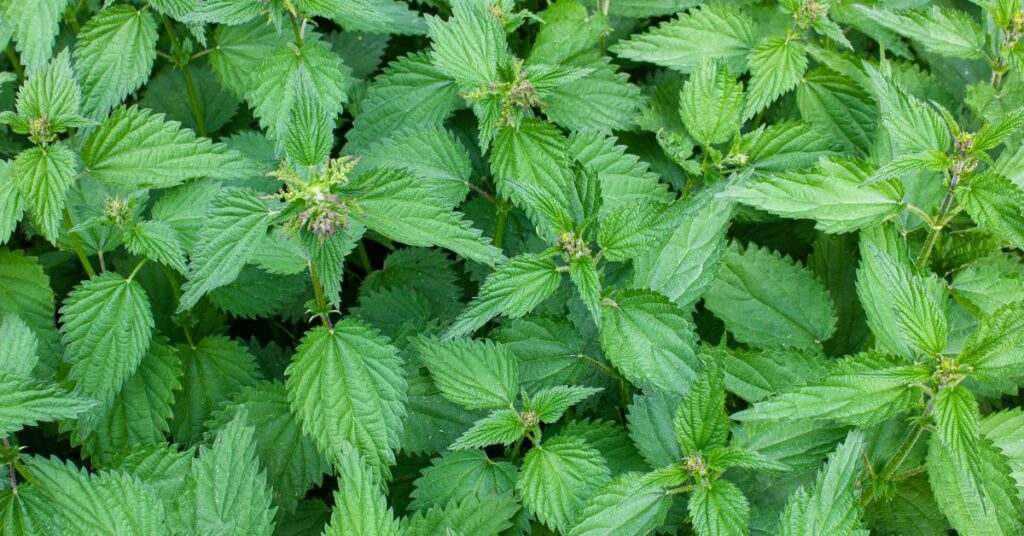
Stinging nettle (Urtica dioica)
Active compounds
Stinging nettle is not only valuable in the kitchen but also highly beneficial in hair care. This versatile plant contains numerous bioactive compounds, including:
- vitamins,
- plant acids,
- histamine,
- serotonin,
- acetylcholine,
- flavonoids.
Together, these substances support both scalp health and hair vitality.
How to use it
Nettle can be used very easily. It may be mixed into a natural shampoo or applied as a herbal infusion massaged directly into the scalp.
There are no known contraindications for external use, making nettle a safe option for regular hair and scalp care. It helps strengthen hair follicles, stimulates hair growth, and cleanses the scalp.
Nettle shampoo recipe
Ingredients
- 1 cup fresh or dried nettle leaves
- 2 cups water
- ½ cup natural shampoo (preferably fragrance-free and chemical-free)
- 1 teaspoon jojoba oil (optional, for hydration)
- 10–15 drops essential oil (rosemary or lavender, optional)
Preparation
1. Preparing the nettle infusion
- Bring 2 cups of water to a boil.
- Place the nettle leaves in a bowl and pour the hot water over them.
- Let steep for 15–20 minutes.
- Strain and allow the liquid to cool to room temperature.
2. Preparing the shampoo
- Mix the natural shampoo and nettle infusion thoroughly.
- Add jojoba oil and essential oils if desired, then mix again.
3. Storage
- Pour into a clean, sealable bottle.
- Store in a cool, dark place and use within 1–2 months.
Use
Apply like a regular shampoo: massage into wet hair and scalp, then rinse thoroughly. Used once or twice weekly, nettle shampoo may strengthen hair, reduce hair loss, and improve scalp condition.
Tips
- If using dried nettle leaves, briefly soak them before infusion.
- Always prepare the infusion fresh for best results.
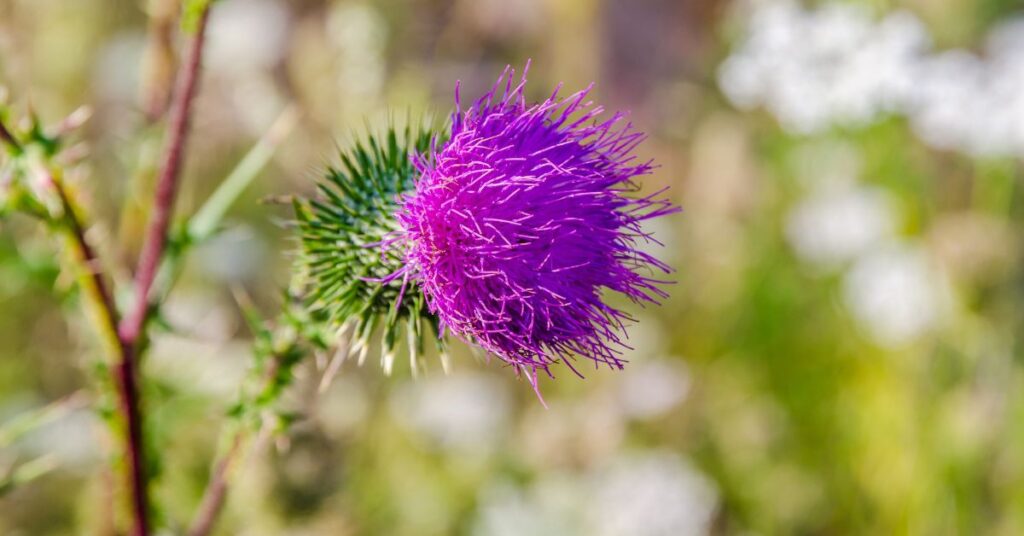
Burdock (Arctium lappa)
Active compounds
Burdock root has long been known as a traditional hair care remedy. It contains:
- inulin,
- mucilage,
- polyacetylenes,
- essential oils,
- tannins and bitter compounds.
These substances contribute to healthier hair and scalp function.
Use
Burdock strengthens and nourishes hair follicles, cleanses the scalp, and promotes regeneration. The root is typically harvested in early spring or early autumn and used as a hair rinse.
Positive effects are often noticeable after several days or within one to two weeks. Burdock helps reduce dandruff, cleanses the scalp, and stimulates hair growth.
Burdock root hair rinse recipe
Ingredients
- 2 tablespoons fresh or dried burdock root
- 2 cups water
- 1 tablespoon apple cider vinegar (optional; avoid on dyed hair)
- 5–10 drops essential oil (rosemary or tea tree, optional)
Preparation
1. Preparing the decoction
- Place the burdock root in a saucepan with water.
- Bring to a boil, then simmer gently for 20–30 minutes.
- Remove from heat and allow to cool.
- Strain and discard the plant material.
2. Preparing the rinse
- Add apple cider vinegar if desired.
- Mix in essential oils.
3. Storage
- Store in a clean bottle in a cool, dark place.
- Use within 1–2 weeks.
Use
Apply to freshly washed, damp hair. Slowly pour onto the scalp while gently massaging. Leave on for 5–10 minutes, then rinse with lukewarm water.
Use once or twice weekly for best results.
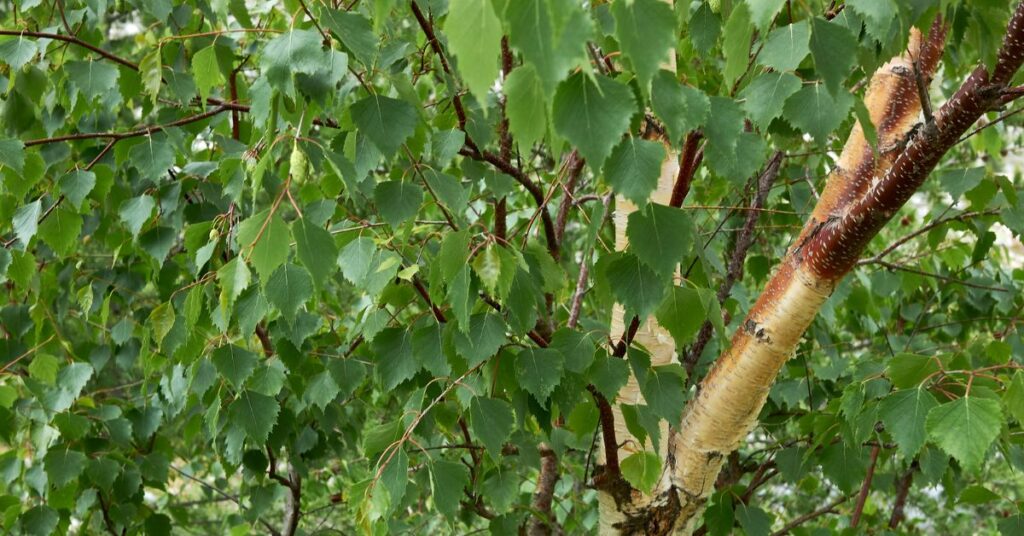
Silver birch (Betula pendula)
Active compounds
Silver birch has long been valued as a medicinal plant beneficial for both hair and scalp health. Birch leaves contain:
- flavonoids,
- triterpene alcohols,
- esters,
- monoterpene glycosides,
- sesquiterpenes,
- tannins,
- trace amounts of essential oils,
- significant potassium content.
Use
Birch leaf tea is traditionally used for urinary cleansing, skin conditions, and rheumatic complaints. In hair care, it may help:
- reduce hair loss,
- relieve dandruff,
- regulate oily scalp conditions.
Historically, birch ash lye was even used for washing hair, particularly in cases of hair loss or scalp disorders.
Birch leaf tea recipe
Ingredients
- 2 teaspoons dried birch leaves
- 2 cups water
- Honey or lemon (optional)
Preparation
1. Preparing the infusion
- Bring water to a boil.
- Remove from heat and add birch leaves.
- Cover and steep for 10–15 minutes.
2. Straining
- Strain using a fine sieve or cloth.
3. Flavoring (optional)
Add honey or lemon to taste.
4. Consumption
Drink freshly prepared tea while warm. For best results, consume 1–2 cups daily.
Tips
If using fresh leaves, use approximately 4–6 leaves per 2 cups of water and wash them thoroughly before use.
Final thoughts
Regular use of these three medicinal plants can significantly support hair and scalp health.
- Stinging nettle nourishes and cleanses while reducing inflammation.
- Burdock root strengthens hair follicles and promotes regeneration.
- Silver birch helps manage scalp conditions while providing cleansing and anti-inflammatory effects.
Incorporating these natural remedies into your routine is a simple and effective way to support stronger, healthier, and more beautiful hair — naturally.