
For most people, sage is associated with throat gargles. However, its essential oil offers far more than that. It is a powerful and versatile oil used for a variety of conditions — and not without reason.At the same time, it is not considered an “easy-to-use” essential oil, so it’s important to understand when and how to use it properly.
What is sage essential oil?
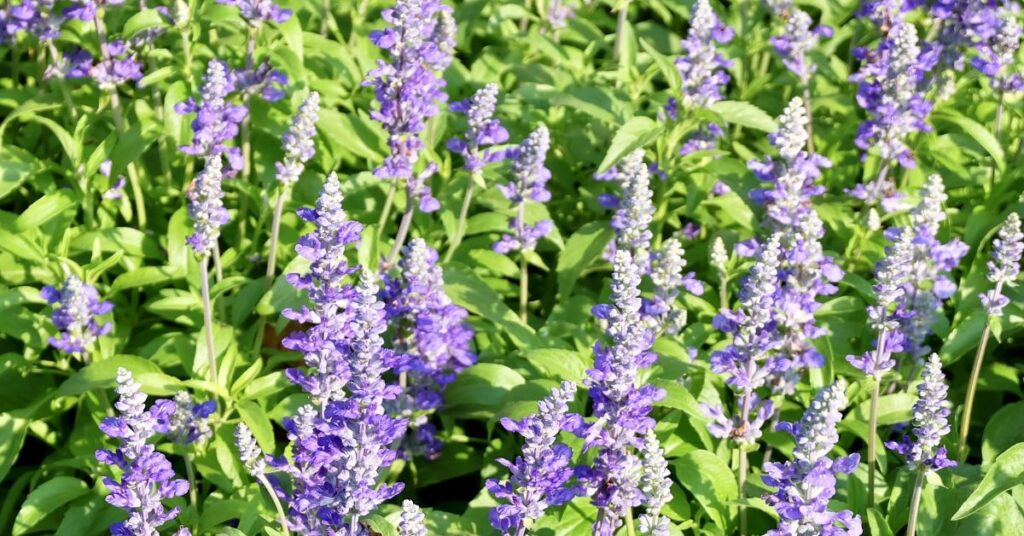
Sage essential oil (Aetheroleum salviae) is obtained from the fresh leaves and shoots of Salvia officinalis through steam distillation.
The plant belongs to the Lamiaceae family and originates from the Mediterranean region, though it is widely cultivated elsewhere.
The oil is typically yellowish or pale green, with a spicy, slightly sweet aroma.
Main active compounds:
- alpha- and beta-thujone
- borneol
- cineole
- camphor
- pinene
These components are responsible for the oil’s characteristic, intense effects.
Oral and throat conditions
Sage essential oil is most commonly used for mouth and throat issues.
It may be applied in cases of:
- gum inflammation
- sore throat
- bad breath
- as a complementary remedy for canker sores
Due to its strong antiseptic and anti-inflammatory properties, it is often included in oral care products.
Respiratory support
Sage essential oil also has mucolytic and expectorant properties.
It may be useful for:
- productive cough
- stubborn mucus
- colds
When diffused or inhaled, it may help clear the airways.
Excessive sweating and odor
One of the unique properties of sage essential oil is its ability to reduce sweating.
It is commonly used for:
- excessive sweating
- foot perspiration
- natural deodorants
This makes it particularly useful during summer or stressful periods.
Skin and fungal issues
Sage essential oil can also be used externally for certain skin conditions.
It may help with:
- minor inflammations
- fungal infections (e.g. athlete’s foot)
- irritated skin
Always dilute before use, as it can be irritating in its concentrated form.
Muscle and joint discomfort
When applied topically, sage essential oil may help relax muscles and reduce pain.
It can be used for:
- muscle pain
- joint discomfort
- rheumatic-type pain
It is most effective when used as part of a massage oil.
Digestive issues
Traditionally, sage has been used to support digestive inflammation and infections. However, the essential oil is not recommended for internal use, so in such cases, sage tea is a safer alternative.
How to use it
Sage essential oil is potent and should always be diluted.
Basic dilution ratio:
- 1 tablespoon carrier oil (almond, jojoba, olive, or grapeseed oil)
- 2–3 drops essential oil
Methods of use:
- diffusion
- inhalation
- topical application
- mouth rinse (well diluted)
Safety considerations
Using sage essential oil requires caution:
- not recommended for internal use due to high thujone content
- may have neurotoxic effects
- should be avoided in epilepsy
- not suitable during pregnancy
- use with caution during breastfeeding (may reduce milk production)
Sage essential oil is a versatile and potent essential oil that can be helpful for various conditions. However, it is not among the “easy-to-use” oils and requires conscious, informed application.
When used properly, it can be a highly effective addition to natural remedies.