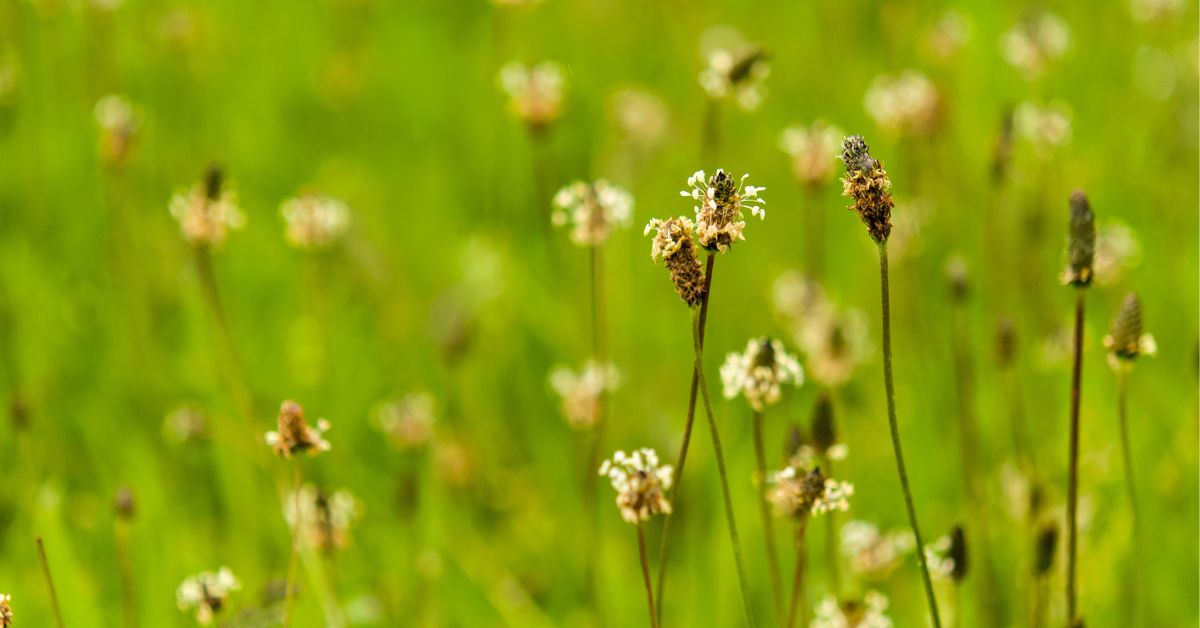
Ribwort plantain (Plantago lanceolata) is one of the most well-known yet often overlooked medicinal herbs you can find on almost any meadow, roadside, or garden. Many people dismiss it as a weed, but in reality it’s one of the most valuable natural remedies for upper respiratory congestion, sore throat, cough, and irritated mucous membranes. Both modern phytotherapy and traditional folk medicine regard plantain as particularly useful because its unique range of active compounds soothe, coat, and heal damaged mucous membranes, while also providing antibacterial, anti-inflammatory, and wound-healing effects.
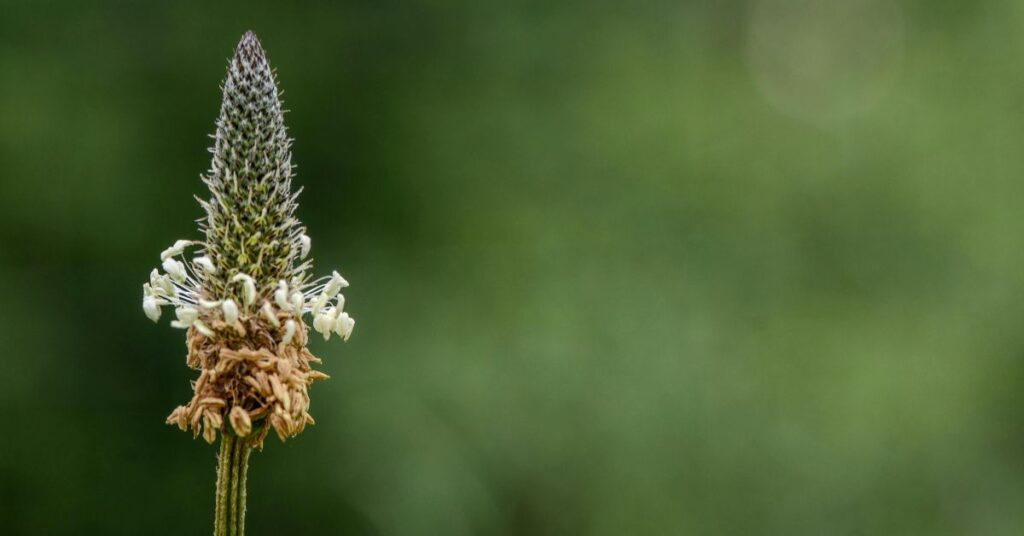
Ribwort plantain belongs to the plantain family (Plantaginaceae) and is native throughout Europe. It is easily recognized by its narrow, lance-shaped leaves forming a basal rosette and the long flower stalks with small brown flowers. Medicinally, the leaves and aerial parts of the plant are used. These can be applied fresh or dried in teas, extracts, syrups, or throat relief preparations.
Valuable active compounds in ribwort plantain
Plantain’s effectiveness comes from the diversity and complexity of its active substances. The most important groups include:
Mucilage (Demulcents)
Mucilage is one of the most significant components. It forms a protective coating on irritated throat and mouth mucosa, which:
- helps suppress cough reflexes
- protects sensitive epithelial tissue
- supports the regeneration of tissues
This is why plantain syrup is considered one of the best natural cough suppressants.
Iridoid glycosides: aucubin and catalpol
These compounds have strong anti-inflammatory, antibacterial, and antiviral effects. Aucubin in particular is effective in cases of:
- sore throat
- tonsillitis
- upper respiratory infections
Their activity helps reduce inflammation and may support the body’s defense against pathogens.
Flavonoids
Flavonoids are potent antioxidants that help:
- protect cells from oxidative stress
- support immune defense
- reduce inflammation
They also contribute to mucosal healing and overall tissue resilience
Tannins (Astringents)
Tannins have a tightening (astringent) effect, which:
- firms up mucous membranes
- reduces excessive secretion
- supports natural cleansing and defense mechanisms
This helps to limit irritation and excessive discharge during infections.
Vitamin C
Plantain contains vitamin C, which plays a supportive role in strengthening the immune system and accelerating recovery during infections.
Conditions where ribwort plantain can help
Ribwort plantain is one of the most versatile natural herbs for respiratory and mucosal complaints. It can be useful for:
Upper respiratory congestion
When suffering from a common cold, nasal irritation, or viral sore throat, the combination of mucilage and iridoids:
- soothes cough
- coats the irritated throat
- may help inhibit pathogen spread
This makes it a gentle yet effective natural remedy during the acute phase of upper respiratory infections.
Mouth and oral mucosa inflammations
Thanks to the astringent and antibacterial components, plantain can help with:
- mouth ulcers (aphthae)
- gingival (gum) inflammation
- general mouth irritation
Using it as a gargle or tea speeds up healing and relief.
Sore throat relief
Plantain is a powerful natural remedy for sore throat. Its coating action provides immediate soothing, while anti-inflammatory compounds support longer-term healing.
Wound healing and disinfection
Traditionally, fresh plantain leaves have long been known as a “roadside bandage”—crushed and applied directly to:
- minor cuts
- insect bites
- abrasions
The antibacterial and tissue-healing properties help speed recovery.
How to use ribwort plantain
Plantain can be used in several ways depending on the specific complaint:
As tea
For upper respiratory issues, cough, or sore throat, plantain tea is particularly effective.
Preparation:
- 1 teaspoon of dried ribwort plantain leaves
- 250–300 ml (about 1 cup) of hot water
- Cover and steep for 10 minutes, then strain
Suggested use: 2–3 cups per day.
As syrup
Plantain syrup is one of the most popular forms used especially for children. It gently suppresses cough and protects the throat without harsh effects.
Externally (compress or fresh leaves)
Crushed fresh leaves can be applied to minor wounds, insect bites, or inflamed areas as a poultice to support healing and reduce irritation.
In commercial preparations
Many throat sprays, lozenges, and herbal cough drops include ribwort plantain extract because of its soothing and anti-irritant properties.
Ribwort plantain (Plantago lanceolata) is one of the most important herbs for relieving symptoms of upper respiratory illnesses, coughs, sore throats, and mucosal irritation. Its mucilage coats and soothes irritated tissues, while iridoids and flavonoids provide anti-inflammatory, antibacterial, and wound-healing effects. Plantain can be used as tea, syrup, poultice, or in herbal preparations—and because it has very few side effects, it is considered one of the safest and most useful medicinal herbs in natural medicine.