
A feeling of fullness after fatty meals, bloating, or discomfort under the right rib cage is often related to the functioning of the gallbladder. Although gallbladder problems are common, many people only begin to pay attention to them when more serious symptoms appear. Yet certain medicinal herbs have long played an important role in supporting digestive function. However, phytotherapy also requires caution in this area: not every plant can be used in every situation, especially in the presence of gallstones.
The role of bile in digestion
Bile is an important digestive fluid produced by the liver and stored in the gallbladder. Its primary function is to assist in the digestion of fats: bile breaks fats into tiny droplets, making them easier to digest and absorb.
Bile also plays an important role in the body’s elimination processes. Certain substances — such as some cholesterol derivatives — leave the body through bile.
If bile production or bile flow is impaired, various digestive complaints may appear, including bloating, discomfort after fatty meals, a feeling of fullness, or even pain.
How medicinal herbs affect bile
Medicinal herbs that influence bile function are generally divided into two main groups.
The first group includes plants with choleretic effects. These stimulate bile production in the liver, increasing the amount of bile produced.
The second group consists of herbs with cholekinetic effects. These help stimulate the contraction of the gallbladder, promoting the release of bile into the intestines.
In practice, most plants possess both effects, meaning they can stimulate bile production and support bile flow at the same time.
Extra caution is necessary in the presence of gallstones
One of the most important questions in the treatment of gallbladder complaints is whether gallstones are present. If stones are present in the gallbladder, the use of bile-stimulating herbs may be clearly contraindicated.
The bile-stimulating effect can move the stones, which may lead to potentially life-threatening complications. Therefore, in the presence of gallstones, bile-stimulating remedies should always be avoided without medical supervision.
In the case of so-called “silent” gallstones — stones that do not cause symptoms — modern medicine often recommends observation. In many cases, stones do not cause problems for a long time, and over time the likelihood of symptoms may even decrease.
However, if gallstones cause symptoms, surgical intervention is usually the recommended solution. In some cases digestive complaints may persist even after surgery — and in such situations certain bile-stimulating herbs may be considered.
It is important to emphasize that no plant remedy exists that can dissolve gallstones with the same effectiveness as medical treatments. For this reason, it is not advisable to attempt to “dissolve” gallstones using home remedies.
Artichoke – one of the best-known bile-supporting plants
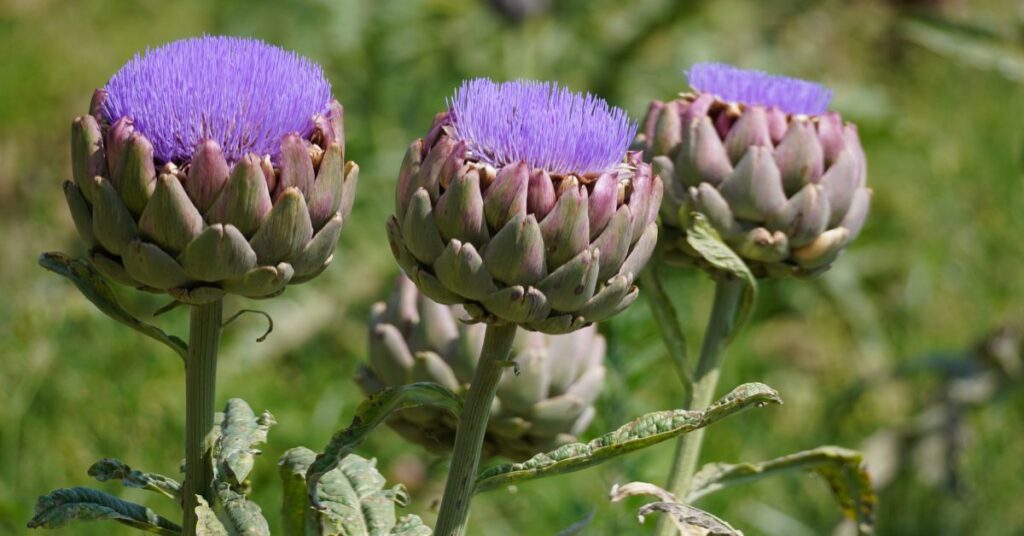
Artichoke (Cynara scolymus) is one of the most widely known medicinal plants that support bile function. In phytotherapy, the leaves of the plant are used.
Its active compounds include caffeic acid derivatives — such as cynarin — as well as sesquiterpene lactones, flavonoids, and essential oils. These compounds stimulate both bile production and bile secretion, and they also possess liver-protective properties.
Artichoke leaves can be prepared as tea, although because of their bitter taste many people prefer to take them in capsules or extract form.
Dandelion – bitter compounds supporting digestion
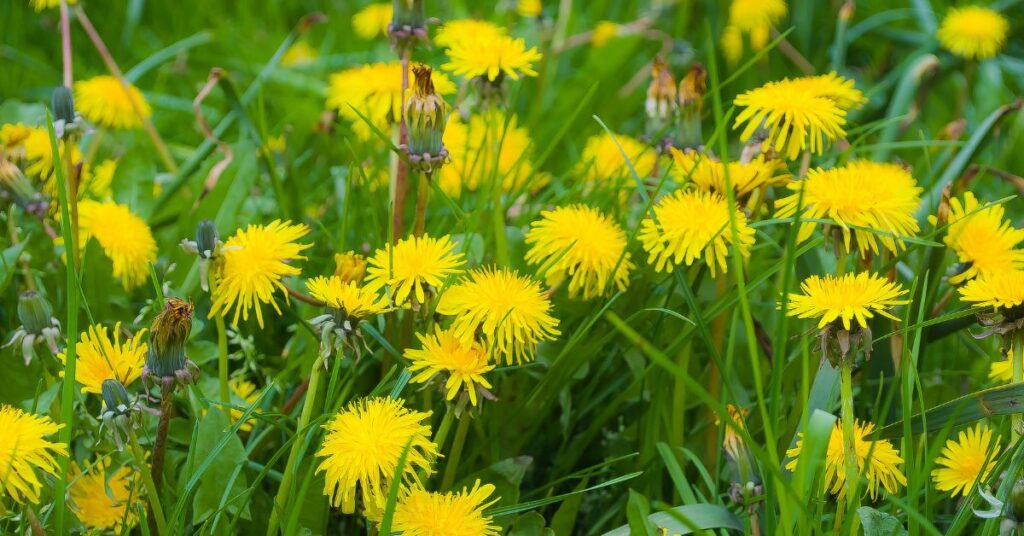
The root of dandelion (Taraxacum officinale) is also an important medicinal herb for supporting bile function.
Its active compounds include sesquiterpene lactones, flavonoids, potassium, inulin, and phytosterols. Its bitter substances stimulate the production of digestive juices, which can also have a beneficial effect on bile function.
Dandelion has both choleretic and cholekinetic effects, meaning it may increase bile production while also promoting bile flow.
Milk thistle – the classic herb for liver protection
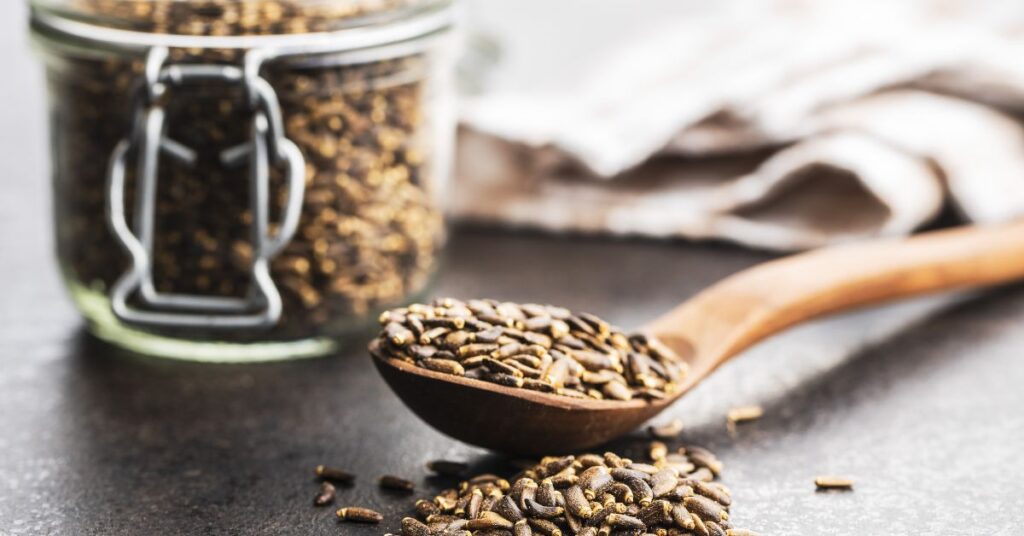
Milk thistle (Silybum marianum) is primarily known as a liver-protective medicinal plant. In phytotherapy, standardized extracts from the plant’s seeds are typically used.
Its most important active compound is silymarin, a flavonolignan complex that protects liver cells and supports their regeneration. It may also influence bile production and bile flow.
Milk thistle is most commonly used in capsule or extract form, although tea or oil can also be prepared from the seeds.
Greater celandine – bile-stimulating and antispasmodic
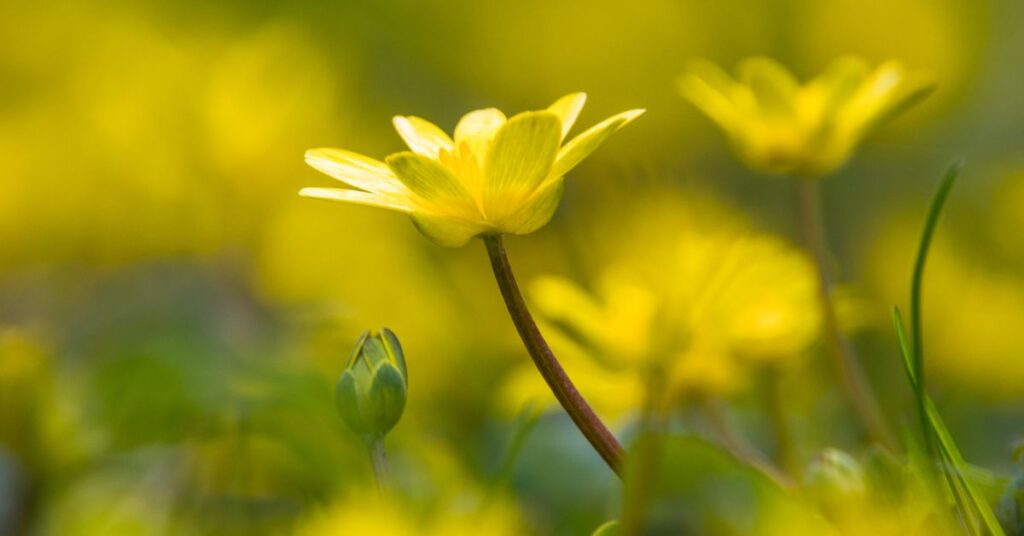
The herb of greater celandine (Chelidonium majus) contains alkaloids that have both choleretic and cholekinetic effects.
A special characteristic of this plant is that its bile-stimulating action is combined with antispasmodic properties. For this reason, it is sometimes used in spasmodic conditions of the bile ducts, such as biliary colic.
However, it is important to know that long-term use may have potentially harmful effects on the liver, which is why prolonged use is not recommended.
Turmeric and greater celandine – complementary effects
Greater celandine is often combined with turmeric. The active compound of turmeric, curcumin, also stimulates bile production and bile flow.
The effects of the two plants may complement each other: the antispasmodic properties of greater celandine may help relax the bile ducts, while turmeric may support bile secretion and digestion. This combination may be particularly useful for supporting gallbladder function.
The proper functioning of bile plays a fundamental role in digestion and metabolic processes. When bile production or bile flow is impaired, various digestive complaints may occur.
Certain medicinal herbs — such as artichoke, dandelion, milk thistle, or greater celandine — may help support bile function. However, their use always requires caution, especially in the presence of gallstones.
Phytotherapy can often be a useful complementary approach for supporting the digestive system, but identifying the underlying causes of gallbladder complaints is always a medical responsibility.