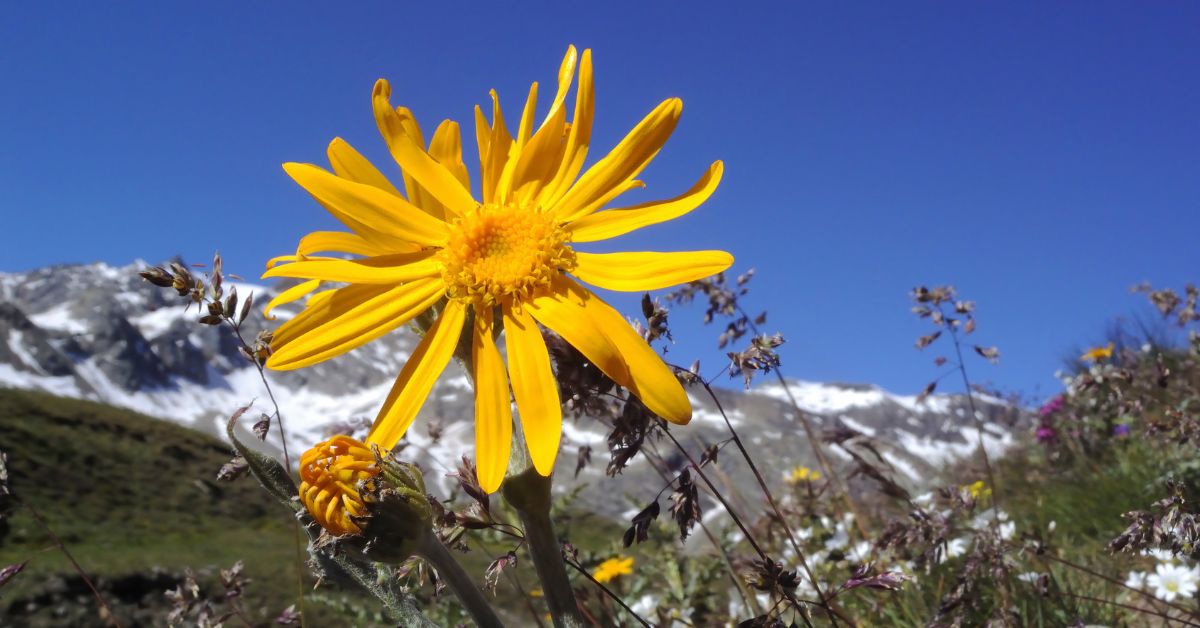
Mountain arnica (Arnica montana) is a wild medicinal plant native to the high mountain regions of Europe and valued for its remarkable therapeutic properties. In Hungary, it is rarely encountered in nature, and since it is a protected species, its collection is strictly regulated. Despite its rarity, arnica is such a unique medicinal herb that it is well worth getting to know and using whenever possible. In this article, we explore the plant’s active compounds, traditional and modern uses, therapeutic applications, and even a simple homemade recipe so you can benefit from its healing effects.
Parts of mountain arnica used in herbal medicine
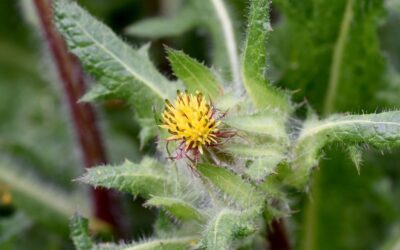
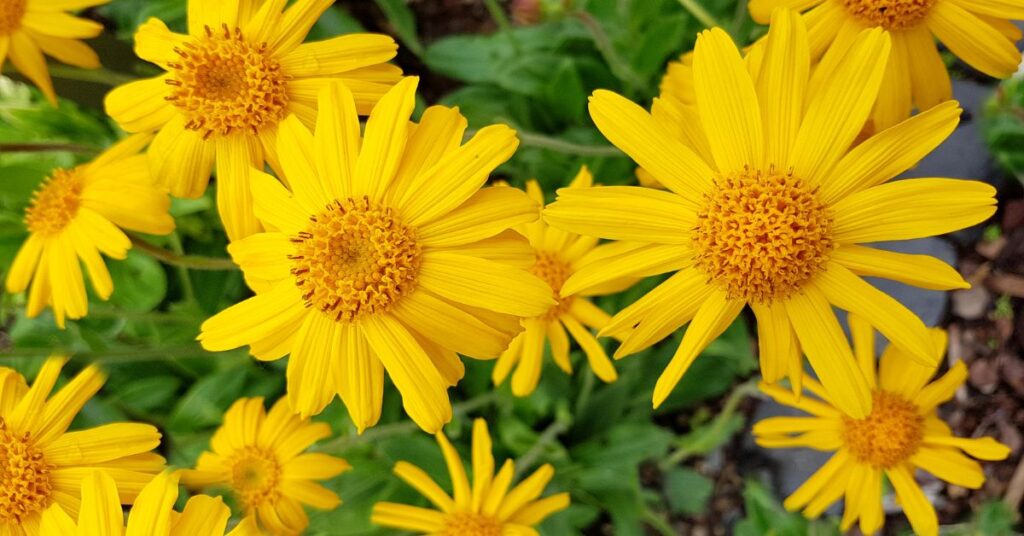
In phytotherapy, the flower heads, flowering aerial parts, and rhizome of mountain arnica are used. The plant produces yellow to orange flowers that bloom between July and August. Arnica flowers are officially listed in the Hungarian Pharmacopoeia VIII, and tinctures prepared from the flowers are widely used in herbal medicine.
Active compounds of mountain arnic
Mountain arnica contains several biologically active substances, including:
- sesquiterpene lactones (especially helenalin),
- flavonoids,
- essential oils (such as azulene and thymol),
- the bitter compound arnicin,
- and mucilage substances.
Together, these compounds are responsible for arnica’s well-known anti-inflammatory, pain-relieving, and wound-healing properties.
Medicinal uses of mountain arnica
Traditional use
Internal use:
Historically, arnica was used to treat circulatory problems. It was believed to stimulate heart function, improve coronary circulation, and reduce peripheral vascular resistance.
External use:
Traditionally applied for bruises, wounds, inflammation, and disinfection. Arnica improves blood circulation in the treated area and supports skin regeneration.
Use in modern phytotherapy
External application:
Today, arnica is mainly used externally in the form of:
- aqueous extracts (herbal infusions),
- alcoholic extracts (tinctures),
- oil macerates.
It is commonly applied for:
- rheumatic complaints,
- post-operative pain,
- sports injuries,
- venous insufficiency,
- varicose veins,
- spider veins,
- and bruising.
Internal use:
Arnica may appear as a component of combination preparations for circulatory support. However, accurate dosing is essential, as overdosing may cause rapid heartbeat and shortness of breath.
Indications and dosage
External use
Aqueous extract:
Compress prepared from approximately 2 g of dried arnica flowers.
Tincture:
Used in creams, ointments, or gels. Diluted tincture (3–10-fold dilution) may also be applied, although higher concentrations increase the likelihood of side effects.
Safety:
When used correctly, external application is generally considered safe.
Internal use
Arnica should not be consumed as a tea on its own.
Symptoms of poisoning may include:
- headache,
- irregular heartbeat,
- breathing difficulties,
- abdominal pain.
Side effects and contraindications
Arnica can frequently cause allergic skin reactions. Prolonged use may damage the skin and lead to inflammatory swelling or dermatitis.
Because internal use may result in toxicity, arnica is recommended primarily for external application only.
Homemade arnica cream recipe
Preparing arnica cream at home is a simple and effective way to benefit from the plant’s healing properties.
Ingredients
- ½ cup dried arnica flowers
- 1 cup olive oil
- ¼ cup beeswax
- 10 drops lavender essential oil (optional)
Preparation
- Place the dried arnica flowers in a glass jar and pour the olive oil over them.
- Let the mixture macerate for 2–3 weeks, shaking occasionally.
- Strain the infused oil into a heatproof container.
- Add the beeswax and heat gently in a water bath until melted.
- Remove from heat and add lavender essential oil if desired.
- Pour into a clean container and allow it to cool completely.
Mountain arnica is a remarkable medicinal plant with a wide range of therapeutic benefits. Although it is rare and protected in Hungary, externally applied arnica preparations can provide natural support for many conditions.
Whether used for bruises, rheumatic complaints, sports injuries, or post-surgical discomfort, arnica extracts offer an effective natural solution. Preparing arnica cream at home is also an excellent way to safely bring the healing power of this traditional herb into everyday life.