Proper storage of medicinal herbs is essential if we want to preserve their active compounds and ensure they remain effective when we need them. Correct storage methods not only help maintain quality and freshness but also prevent deterioration. In this article, we’ll review how to store medicinal herbs correctly, with special attention to plants that contain essential oils and those that do not, along with some practical tips.
Basic rules for storing medicinal herbs
To maintain the therapeutic value of medicinal plants, appropriate storage conditions are crucial. Whether herbs are stored at home, in a processing facility, or in wholesale environments, the same fundamental principles apply.
Maintaining the right temperature
Medicinal herbs should be stored at room temperature, ideally below 25°C. Lower temperatures slow down chemical reactions, helping plants retain their quality for a longer time.
Herbs containing essential oils are particularly sensitive to heat. Higher temperatures may lead to significant loss of active compounds. This is especially true for plants with external essential oil glands, such as peppermint or sage.
Low humidity
During storage, relative humidity should not exceed 60%. Dried herbs easily absorb moisture from the air, and increased humidity can cause them to reabsorb water, which almost always results in quality deterioration.
Even temporary exposure to higher humidity can damage dried herbs, so this factor must also be considered during transportation.
Protection from light
Just like medicines and cosmetic products, medicinal herbs must be protected from direct sunlight. Avoid storing them near windows or in places exposed to sunlight.
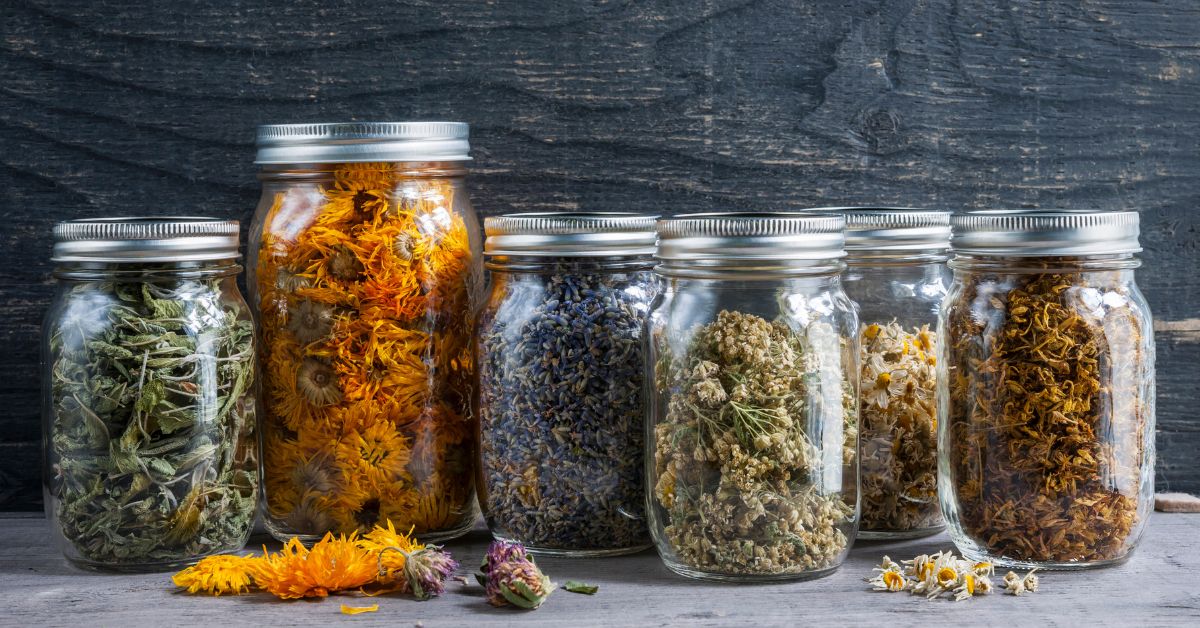
Light protection is particularly important for essential oil–containing plants. Ideally, they should be stored in drawers, cupboards, or colored containers. Transparent packaging such as cellophane or clear glass jars may not provide adequate protection if exposed to light.
Clean and pest-free storage
Clean storage conditions are essential — not only in industrial environments but at home as well. Pests such as rodents and insects can easily damage stored herbs.
Always keep medicinal plants in closed containers to prevent contamination and pest infestation.
Odor-free environment
Herbs should be stored in spaces free from strong odors, as plant material can easily absorb surrounding smells. Avoid storing them near cleaning agents or chemicals.
Strongly aromatic plants — such as valerian or thyme — should preferably be stored separately in sealed containers so their scent does not transfer to other herbs.
Storage of non-essential-oil plant parts
One might assume that plant parts without essential oils, such as stems or roots, require less attention during storage. However, a few precautions are still necessary to maintain their quality.
Storage in cloth or paper bags
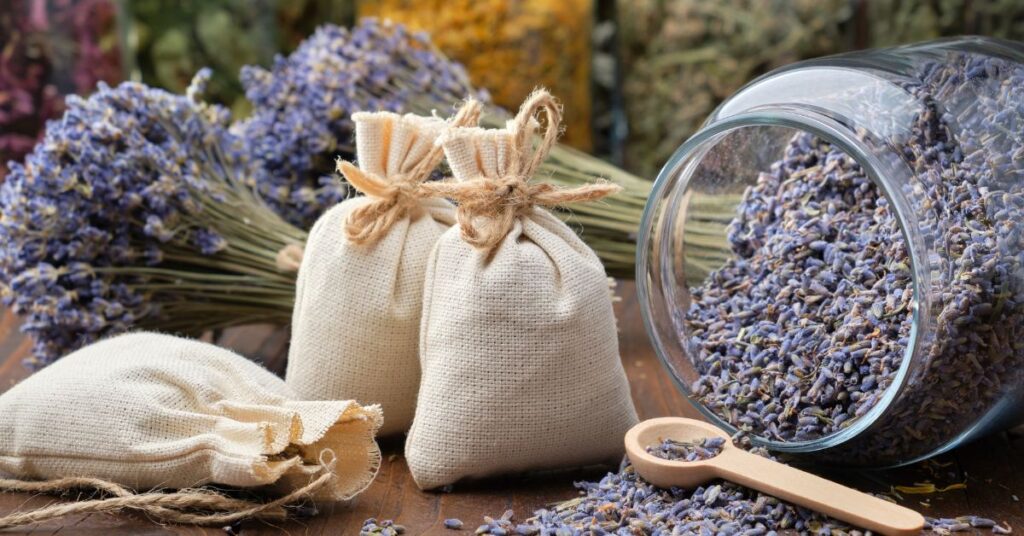
Cloth or paper bags are suitable for storing non-essential-oil plant materials because they allow airflow, reducing the risk of mold formation.
However, they also have disadvantages:
- Limited pest protection: insects may easily enter these containers.
- Moisture risk: if herbs are not completely dry, residual moisture can still lead to mold growth.
Using glass jars
Glass jars provide better protection against insects and pests due to their tight seal. However, herbs must be perfectly dry before placing them inside, otherwise mold may develop.
Tips for storing herbs in jars:
- Ensure thorough drying: even when herbs seem dry, wait an additional 3–4 days to be certain.
- Breaking or grinding plant material: larger plant parts, such as willow bark, can be broken into smaller pieces or ground to save storage space.
Storage of essential oil–containing plant parts
Leaves and flowers rich in essential oils require special storage conditions to preserve their aromatic compounds.
Use airtight containers
Essential oil–rich plant parts should be stored in tightly sealed containers, such as glass jars or sealed bags. These help prevent evaporation of volatile oils while also protecting against moisture and insects.
As mentioned earlier, avoid exposure to direct light — transparent containers are unsuitable unless kept in dark storage.
Proper drying and regular inspection
Essential oil–containing herbs must also be thoroughly dried before storage to prevent mold growth. It is advisable to check stored herbs regularly to ensure their quality remains intact.
Shelf life
Storage duration is another important factor. Herbs rich in essential oils tend to lose their active compounds faster, making aroma-protective packaging especially important.
Plants with internal essential oil storage structures — such as caraway or fennel — may retain their quality for up to 18 months.
Essential oil–rich herbs should generally be stored for no longer than 12 months.
By applying proper storage methods, medicinal herbs can remain ready for use while maintaining their effectiveness. Correct storage ensures that these natural remedies continue to support health and wellbeing whenever they are needed.
You can read more about different herbal preservation methods in the next article.