There’s that uncomfortable feeling when, after a meal, instead of satisfaction you’re left with bloating, tension, or mild cramping. It may not be a serious issue, yet it can linger throughout the day. In such cases, many people look for gentler, natural solutions. Caraway essential oil often comes into focus here — not by accident, as it has long been used to support digestion, only in a much more concentrated form than we are used to.
What is caraway essential oil?
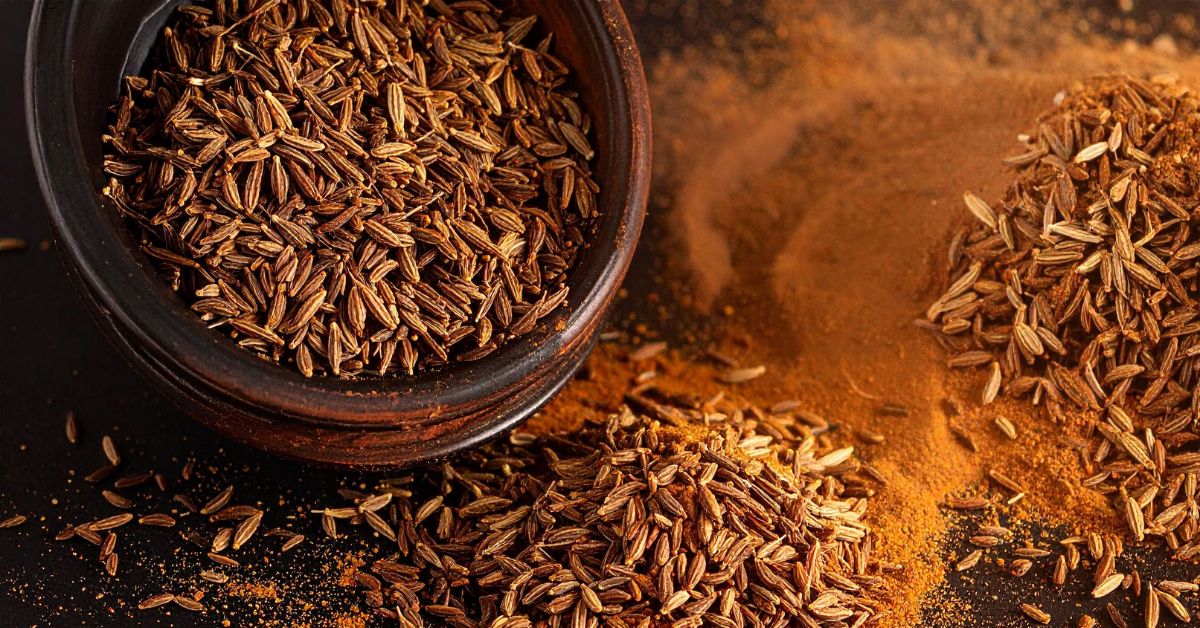
Caraway essential oil (Aetheroleum carvi) is obtained from the fruits of Carum carvi. After drying, the seeds are crushed, and the essential oil is extracted through steam distillation.
The plant is well known and widely used as a culinary spice, but its essential oil represents a much more concentrated level of action.
Main active compounds:
- carvone
- limonene
These compounds are responsible not only for the characteristic warm, spicy aroma but also for its effects on the digestive system.
When your digestion just feels “off”
Caraway essential oil is most often used when digestion doesn’t feel quite right. It’s not necessarily about a specific illness, but rather a persistent sense of discomfort.
It may help in cases of:
- bloating
- feeling of fullness
- post-meal tension
- slow or sluggish digestion
Thanks to its carminative effect, it may reduce gas formation, making the abdomen feel lighter. This is also why caraway has traditionally been used in heavier, fatty meals.
Cramps and tension
Digestive discomfort is often accompanied by mild cramping. These may not be severe, but they can still be disruptive.
Caraway essential oil’s antispasmodic properties can be helpful in such situations. When applied externally in diluted form — for example, as an abdominal massage — it may help relax muscles and reduce tension.
Supporting bile function
Caraway essential oil does more than simply “ease digestion” — it may also influence bile function.
Due to its choleretic effect, it may support:
- bile production
- bile flow
This can be particularly useful when the digestive system is under greater strain, such as after fatty meals.
However, in cases of gallstones, the use of such substances requires caution.
Also useful for respiratory issues
Although caraway is primarily associated with digestion, its essential oil may also be considered for respiratory conditions.
Thanks to its mucolytic and expectorant properties, it may be used for:
- productive cough
- stubborn mucus
- colds
When inhaled or diffused, it may help clear the airways.
How to use it
Caraway essential oil is concentrated and should always be diluted.
General dilution ratio:
- 1 tablespoon carrier oil (such as almond, jojoba, olive, or grapeseed oil)
- 2–3 drops caraway essential oil
Methods of use:
- abdominal massage for digestive discomfort
- diffusion
- inhalation
Safety considerations
Caraway essential oil is generally well tolerated, but some precautions are important:
- it may cause mild skin irritation
- it can irritate mucous membranes
- perform a patch test before first use
- do not use undiluted
Caraway essential oil may not be one of the “flashy” essential oils, but it is particularly reliable when it comes to supporting digestion. It is not a quick, instant “miracle solution,” but rather a tool that can gently yet effectively help restore balance.
If you frequently experience bloating, tension, or digestive discomfort, it may be worth giving it a try.