Do you feel heavy after eating, experience slow digestion, or simply have no appetite? These are the situations when many people instinctively look for something to “kick-start” their stomach. Blessed thistle is exactly for this: a classic bitter herb that has long been used to stimulate digestion — and for good reason.
What is blessed thistle?
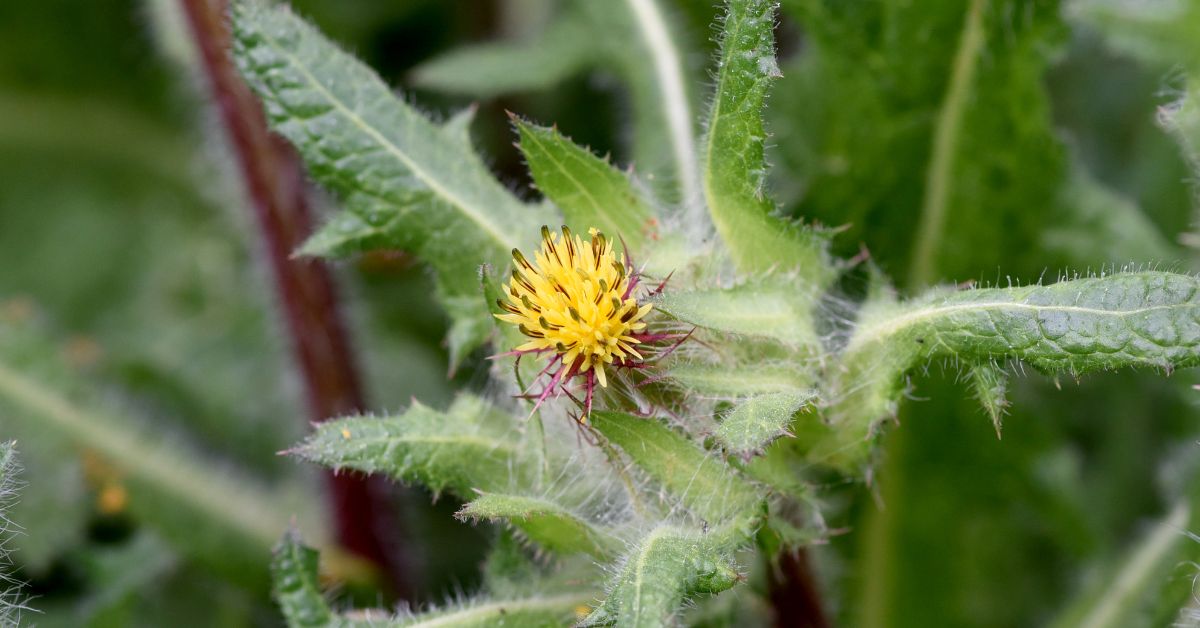
Blessed thistle (Cnicus benedictus) is a plant belonging to the Asteraceae family. In herbal medicine, its aerial parts (the herb) are used.
Main active compounds:
- bitter compounds (primarily cnicin)
- essential oils
- tannins
- mucilage
Together, these components are responsible for its digestive-stimulating and stomach-strengthening effects.
How does it work?
The key to blessed thistle’s effect lies in its bitter compounds.
When we perceive a bitter taste:
- saliva production increases
- gastric acid secretion is stimulated
- bile production and flow increase
This creates a full digestive “chain reaction” that prepares the body to process food.
In simpler terms:
the bitter taste signals the body that “work is coming,” and the digestive system becomes activated accordingly.
This is why blessed thistle works as:
- an appetite stimulant
- a digestive aid
- a stomach tonic
When to use it
Blessed thistle is typically used when digestion feels “slow” or inefficient.
Such cases include:
- loss of appetite
- feeling of fullness after eating
- bloating
- heartburn
- sluggish digestion
The bitter compounds help prevent digestion from becoming sluggish and support smoother function.
Liver and bile support
Blessed thistle not only affects the stomach but also supports liver and bile function.
It increases:
- bile production
- bile flow
This is important because bile plays a key role in fat digestion. If this process is impaired, overall digestion may slow down.
How to use it
Blessed thistle is most commonly used as a tea or tincture.
Tea:
- pour about 200–250 ml of hot water over 1 teaspoon of dried herb
- let it steep for 10–15 minutes
Important:
consume 15–20 minutes before meals to best support digestion.
Tincture:
- a more concentrated form
- a few drops before meals are sufficient
The tea has a distinctly bitter taste — this is not a flaw, but part of its effect.
Safety considerations
Blessed thistle is a potent herb and not suitable for everyone.
Avoid use in cases of:
- gastric or intestinal ulcers
- sensitive stomach (in larger amounts)
- pregnancy
In excessive doses, it may cause:
- nausea
- stomach cramps
- discomfort
It may also increase photosensitivity, so caution is advised with prolonged use.
Why does it still work today?
Blessed thistle is a classic “bitter drug” that has been used for centuries. It is commonly found in digestive bitters and herbal formulations.
Its effect is simple yet effective: it does not suppress symptoms but activates digestive processes.
If your digestion is slow, your appetite is low, or you often feel heavy after eating, blessed thistle can be a well-established solution. Through its bitter compounds, it naturally stimulates digestion and supports the function of the stomach, liver, and bile system.